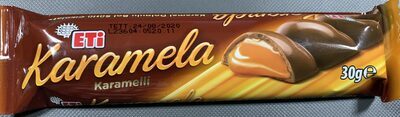
Karamela
32
Nutrition Score
Poor

Karamela

8690526018065
Starts at 50. Rises with whole foods, proteins, vitamins; drops with added sugars, trans fats, and syrups.
69
Hazard Score
Use with caution
55
Mirella Index
Everyday
Quality category: Gourmet (80+), Everyday (50–79), or Basic (0–49)
Ingredients
Chocolate
Chocolate  ·  −3 pts
Moderate health concern
Sweet food made from roasted cacao beans, combined with sugar and often milk. High in added sugar and saturated fat in most confectionery forms.
Sugar (Sucrose)
Sugar  ·  −4 pts
Moderate health concern Source: WHO, FDA
Common refined sugar. High consumption is linked to obesity, type 2 diabetes, and tooth decay.
Cocoa Butter
CocoaButter  ·  No known concerns
Natural fat from cocoa beans. Rich in stearic acid; neutral effect on LDL cholesterol.
Cocoa Mass (Liquor)
CocoaMass  ·  No known concerns
Pure ground cocoa beans. The foundational component of high-quality dark chocolate. Rich in polyphenols.
Cream
Cream  ·  No known concerns
Contains milk
High-fat dairy product skimmed from milk, used to enrich sauces, coffee, and desserts. Contains milk allergen.
Milk Powder (Dried Milk)
MilkPowder  ·  No known concerns
Contains milk
Milk with the water removed, sold as a shelf-stable powder for reconstituting or baking. Contains milk allergen.
Lactose
Lactose  ·  −1 pts
Moderate health concern Source: EFSA, FDA
Contains milk
Milk sugar. Causes digestive issues in people with lactose intolerance.
Lecithin
E322  ·  No known concerns
Natural emulsifier often derived from soy or eggs. Completely safe.
Vanillin (4-hydroxy-3-methoxybenzaldehyde)
VanillinCompound  ·  No known concerns
Vanillin flavour compound; chemically distinct from ethyl vanillin.
Plain Caramel
E150a  ·  No known concerns
Natural brown colorant made by heating sugar, used to darken drinks, sauces, and baked goods.
Fully Hydrogenated Palm Oil
HydrogPalm  ·  −8 pts
Moderate health concern
Palm oil that has been fully hydrogenated into a solid, shelf-stable fat used in baked goods and spreads. Free of trans fats, but very high in saturated fat.
Invert Sugar
InvertSugar  ·  −8 pts
Moderate health concern Source: EFSA, FDA
Hydrolysed sucrose syrup used in confectionery.
Sorbitol
E420  ·  −2 pts
Moderate health concern Source: EFSA, FDA
Sugar alcohol used as a sweetener and humectant. Can have a laxative effect in large amounts.
Glycerol (Glycerin)
E422  ·  No known concerns
Humectant used to maintain moisture in cakes, protein bars, and chocolates. Generally safe but can cause mild digestive issues in massive doses.
Whey Powder (Dried Whey)
WheyPowder  ·  No known concerns
Contains milk
Dried form of whey, the liquid left after cheesemaking, used to add protein and texture to processed foods. Contains milk allergen.
Inulin
Inulin  ·  No known concerns
Prebiotic fiber extracted from chicory root or other plants, used to add fiber and a mild sweetness to processed foods.
wheat
wheat  ·  No known concerns
Contains cereals containing gluten
Cereal grain milled into flour for bread, pasta, and baked goods. Contains gluten.
Salt (Sodium Chloride)
Salt  ·  −2 pts
Moderate health concern Source: WHO, FDA
Common table salt used for flavouring and preservation. High intake is linked to hypertension.
Mono- and Diglycerides of Fatty Acids
E471  ·  −3 pts
Moderate health concern Source: EFSA, FDA
Common emulsifiers derived from fats. May contain trans fats. Used in bread, margarine, and ice cream.
Sodium Carbonates (Baking Soda)
E500  ·  No known concerns
Common raising agent and acidity regulator. Safe at normal food use levels.
Natural Flavouring
NatFlavour  ·  No known concerns
Catch-all term for flavour compounds derived from natural sources (plants, animals, fermentation).
Invertase (E1103)
Invertase  ·  No known concerns
Enzyme used in confectionery to soften fondant centres.
Advertisement
Community Reviews

Please log in to leave a review. Login

Something wrong with this product's data? v