Free Food Barcode Scanner

Know What's Really In Your Food

Scan any food barcode to instantly reveal a 0–100 nutrition score, a full ingredient hazard breakdown, and E-number classifications — sourced from EFSA & FDA.

or enter barcode manually

EFSA & FDA sourced data
No account required
Camera stays on your device
Free forever

How FoodsScan Works

Three steps to understand what you're eating

1. Scan the Barcode

Point your camera at any food product barcode — or type it manually. No app download. Works in any modern browser.

2. Analyse Ingredients

Our database cross-references each ingredient and E-number against EFSA and FDA safety classifications and hazard levels.

3. See Your Score

Get a clear 0–100 nutrition score, a colour-coded verdict, and a full ingredient-by-ingredient breakdown with risk explanations.

How the Score Works

A transparent, science-backed scoring method

Every product is rated on nutritional quality and ingredient safety. Each ingredient adjusts the score based on its nutritional value and its hazard level as classified by regulatory agencies. The clearer and cleaner the ingredient list, the higher the score.

80 – 100
Healthy
Minimal hazardous additives detected
50 – 79
Use with caution
Some ingredients warrant attention
0 – 49
Hazardous
Multiple high-risk ingredients present

Why FoodsScan?

Privacy First

Your camera feed never leaves your device. We use no advertising trackers and collect no personal data without consent.

Regulatory Sources

Ingredient classifications are based on peer-reviewed data from EFSA (European Food Safety Authority) and the U.S. FDA.

Community Powered

Missing products can be submitted by the community. Photograph the label and we read the ingredients from it, then a moderator checks the result.

Instant & Offline

Install FoodsScan as a PWA on any device. Works offline for previously scanned products. No app store required.

Frequently Asked Questions

What is FoodsScan?

FoodsScan is a free food barcode scanner that analyses the ingredients in any packaged food product and returns a 0–100 nutrition score. It classifies each ingredient by hazard level using data from the European Food Safety Authority (EFSA) and the U.S. Food and Drug Administration (FDA). No account or app download is required.

How is the score calculated?

Each product is scored on nutritional value and ingredient safety. Every ingredient adjusts the score according to its nutritional contribution and its hazard level (low, medium, or high). Scores range from 0 to 100: 80–100 is healthy, 50–79 warrants caution, and 0–49 is classified as hazardous.

What are E-numbers and are they dangerous?

E-numbers are codes assigned by the EU to approved food additives including preservatives, colorants, emulsifiers, and flavour enhancers. Not all E-numbers are dangerous — many are derived from natural sources. However, some (such as E621 monosodium glutamate or E951 aspartame) carry medium or high hazard classifications from certain regulatory bodies. FoodsScan shows the specific classification and regulatory source for each E-number.

Is FoodsScan free?

Yes. FoodsScan is completely free. You can scan barcodes, view scores, and read all ingredient information without creating an account. An optional free account lets you post community reviews and submit missing products.

Does FoodsScan track me?

No. Your camera feed is processed entirely on your device using the browser's native BarcodeDetector API — it is never streamed to our servers. We do not use advertising trackers, cookies for profiling, or third-party analytics for tracking. An account is optional and only required to post reviews or submit products.

What if a product is not in the database?

If a product is not found, you can contribute it. Simply photograph the product front and its ingredients label. The product appears right away, marked "not yet analysed" — we never show a score we have not actually worked out. We then read the ingredients from your label photo, match them against our database, and a moderator reviews the result before the product gets its scores.

Scan a Food Product

Point your camera at a product barcode

Nutrition Score

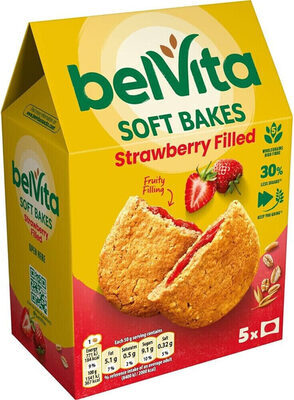
soft bakes strawberry

7622210592262
Starts at 50. Rises with whole foods, proteins, vitamins; drops with added sugars, trans fats, and syrups.
Hazard Score
Mirella Index
Quality category: Gourmet (80+), Everyday (50–79), or Basic (0–49)
Ingredients
crescut sub s programul Harmony
No known concerns
O călătorie cu adevărat benefică
No known concerns
ZA ODLIČEN ZAČETEK DNEVA
No known concerns
pridelane na sončnih Harmony poljih
No known concerns
ZA ODLIČAN POČETAK DANA
No known concerns
uzgojene na sunčanim Harmony poljima
No known concerns
ZA SJAJAN POČETAK DANA
No known concerns
gajene na osunčanim Harmony p od farme do vas! 7% 96 96
No known concerns
enrichis en calcium
No known concerns
magnésium et fer
No known concerns
Ingrédients céréales
No known concerns
wheat
wheat  ·  No known concerns
Contains cereals containing gluten
céréales complètes
No known concerns
gruau d'avoine
No known concerns
sarrasin complet concassé
No known concerns
farine W complète d'orge
No known concerns
Oats
Oats  ·  No known concerns
Contains cereals containing gluten
Whole grain cereal rich in soluble fibre (beta-glucan).
farine complète D d'épeautre
No known concerns
Rice
Rice  ·  No known concerns
Whole cereal grain. A staple carbohydrate.
farine de blé malté
No known concerns
Sugar (Sucrose)
Sugar  ·  −4 pts
Moderate health concern Source: WHO, FDA
Common refined sugar. High consumption is linked to obesity, type 2 diabetes, and tooth decay.
Canola Oil (Rapeseed)
CanolaOil  ·  −2 pts
Moderate health concern Source: FDA, EFSA
Vegetable oil derived from a variety of rapeseed. Low in saturated fat, high in monounsaturated fats.
Glycerol (Glycerin)
E422  ·  No known concerns
Humectant used to maintain moisture in cakes, protein bars, and chocolates. Generally safe but can cause mild digestive issues in massive doses.
Modified Starch
ModStarch  ·  −2 pts
Moderate health concern Source: EFSA, FDA
Chemically or physically treated starch for improved cooking properties. Generally safe.
High Fructose Corn Syrup
HFCS  ·  −5 pts
Moderate health concern Source: FDA, WHO
Refined sweetener. FDA states it is not more dangerous than other sugars; broad scientific consensus finds no meaningful metabolic difference from sucrose. Still a high-glycaemic added sugar linked to obesity/metabolic risk in excess.
Inulin
Inulin  ·  No known concerns
Prebiotic soluble fibre (chicory/agave).
Isomaltulose (Palatinose)
Isomaltulose  ·  −3 pts
A slow-release sugar, lower glycaemic impact than sucrose but still an added sugar.
agents de charge W polydextrose
No known concerns
Maltitol
E965  ·  −2 pts
Moderate health concern Source: EFSA
Sugar alcohol sweetener. Safe for teeth but causes digestive gas, bloating, and laxative effects in moderate doses.
purée de fraise concentrée
No known concerns
équivalent purée de fraise
No known concerns
amidon
No known concerns
minéraux
No known concerns
Calcium Carbonate
CalciumCarb  ·  No known concerns
Common calcium supplement and anti-caking agent. Found naturally in chalk and limestone.
carbonate de mu magnésium
No known concerns
fer élémentaire
No known concerns
Salt (Sodium Chloride)
Salt  ·  −2 pts
Moderate health concern Source: WHO, FDA
Common table salt used for flavouring and preservation. High intake is linked to hypertension.
poudre à lever
No known concerns
Sodium Carbonates (Baking Soda)
E500  ·  No known concerns
Common raising agent and acidity regulator. Safe at normal food use levels.
émulsifiant
No known concerns
Soy Lecithin
SoyLecithin  ·  No known concerns
Contains soybeans
Emulsifier derived from soybean oil. Widely used in chocolate and baked goods. Generally safe.
aromatisants
No known concerns
pui correcteurs d'acidité
No known concerns
Citric Acid
E330  ·  No known concerns
Natural organic acid used as an antioxidant and flavoring. Safe for ingestion.
Malic Acid
E296  ·  No known concerns
Natural acid found in apples and pears. Used as acidity regulator and flavour enhancer.
Sodium Citrate
E331  ·  No known concerns
Acidity regulator and emulsifying salt.
Gluten
GlutenIng  ·  −3 pts
Moderate health concern Source: EFSA, FDA
Contains cereals containing gluten
Protein complex in wheat, rye and barley. Causes coeliac disease in ~1% of population.
Glucose (Dextrose)
Glucose  ·  −3 pts
Moderate health concern Source: EFSA, FDA
Simple sugar used as a sweetener, energy source, and in food processing. High GI.
jus de carotte noire concentrée
No known concerns
gélifiant
No known concerns
Pectin
E440  ·  No known concerns
Natural gelling agent from fruit peel. Used in jams, jellies, and fruit-based products. Safe.
arômes
No known concerns
Peut contenir lait
No known concerns
Isomaltulose est une source de glucose et de fructose
No known concerns
Community Reviews

Please log in to leave a review. Login

Something wrong with this product's data? v

Help Us Add This Product

This barcode is not in our database.

Barcode:

Tap to take or upload photo
Tap to photograph the ingredients label