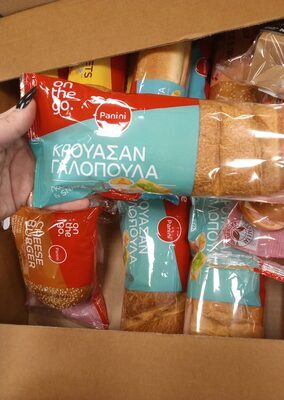
Panini On The Go Croissant With Turkey  Gouda Cheese & Mustard Sauce 170g
6
Nutrition Score
Poor

Panini On The Go Croissant With Turkey Gouda Cheese & Mustard Sauce 170g

5204610002651
Starts at 50. Rises with whole foods, proteins, vitamins; drops with added sugars, trans fats, and syrups.
2
Hazard Score
Hazardous
13
Mirella Index
Basic
Quality category: Gourmet (80+), Everyday (50–79), or Basic (0–49)
Ingredients
wheat
wheat  ·  No known concerns
Contains cereals containing gluten
Cereal grain milled into flour for bread, pasta, and baked goods. Contains gluten.
Ascorbic Acid (Vitamin C)
E300  ·  No known concerns
Natural antioxidant vitamin. Used to prevent oxidation in foods and beverages. Safe and beneficial.
Margarine
Margarine  ·  −2 pts
Spreadable fat made from vegetable oils, used as a butter alternative in baking and on bread. Modern formulations avoid trans fats, though some contain saturated fat.
Canola Oil (Rapeseed)
CanolaOil  ·  −2 pts
Moderate health concern Source: FDA, EFSA
Vegetable oil derived from a variety of rapeseed. Low in saturated fat, high in monounsaturated fats.
sunflower oil
sunflower oil  ·  No known concerns
Vegetable oil pressed from sunflower seeds, commonly used for cooking and frying due to its light flavor.
Water
Water  ·  No known concerns
The most common ingredient in processed foods.
Mono- and Diglycerides of Fatty Acids
E471  ·  −3 pts
Moderate health concern Source: EFSA, FDA
Common emulsifiers derived from fats. May contain trans fats. Used in bread, margarine, and ice cream.
Citric Acid
E330  ·  No known concerns
Natural organic acid used as an antioxidant and flavoring. Safe for ingestion.
Beta-Carotene
E160a  ·  No known concerns
Natural orange-yellow pigment found in carrots. Acts as a precursor to vitamin A; generally safe.
Salt (Sodium Chloride)
Salt  ·  −2 pts
Moderate health concern Source: WHO, FDA
Common table salt used for flavouring and preservation. High intake is linked to hypertension.
Sugar (Sucrose)
Sugar  ·  −4 pts
Moderate health concern Source: WHO, FDA
Common refined sugar. High consumption is linked to obesity, type 2 diabetes, and tooth decay.
Egg
Egg  ·  No known concerns
Contains eggs
Whole chicken egg, used as a binding, leavening, and enriching ingredient in countless recipes. Contains egg allergen.
Yeast
Yeast  ·  No known concerns
Single-celled fungus used to ferment dough for bread and beer, or as a nutritional supplement (nutritional yeast).
High Fructose Corn Syrup
HFCS  ·  −5 pts
Moderate health concern Source: FDA, WHO
Refined sweetener. FDA states it is not more dangerous than other sugars; broad scientific consensus finds no meaningful metabolic difference from sucrose. Still a high-glycaemic added sugar linked to obesity/metabolic risk in excess.
Whey Powder (Dried Whey)
WheyPowder  ·  No known concerns
Contains milk
Dried form of whey, the liquid left after cheesemaking, used to add protein and texture to processed foods. Contains milk allergen.
Chicken Meat
ChickenMeat  ·  No known concerns
Poultry meat from chicken, a lean source of protein used fresh, frozen, or processed.
potato starch
potato starch  ·  No known concerns
Starch extracted from potatoes, used as a thickener and binder in sauces, baked goods, and gluten-free recipes.
Soya (Soybean)
SoyaIng  ·  −2 pts
Moderate health concern Source: EFSA, FDA
Contains soybeans
Common allergen; also a source of protein and plant-based alternatives. Phytoestrogen content.
Glucose (Dextrose)
Glucose  ·  −3 pts
Moderate health concern Source: EFSA, FDA
Simple sugar used as a sweetener, energy source, and in food processing. High GI.
Maltodextrin
MaltodextrinIng  ·  −4 pts
Moderate health concern Source: FDA, EFSA
Highly processed starch derivative. Very high glycaemic index, used as filler and thickener.
Carrageenan
E407  ·  −5 pts
Moderate health concern Source: EFSA
Thickener extracted from red seaweed. Some controversial evidence links degraded types to gut inflammation.
Sodium Phosphate
E339  ·  −2 pts
Phosphate additive; high intake of phosphates is monitored.
Natural Flavouring
NatFlavour  ·  No known concerns
Catch-all term for flavour compounds derived from natural sources (plants, animals, fermentation).
Diphosphates (Sodium/Potassium)
E450  ·  −5 pts
Moderate health concern Source: EFSA
Water-binding stabilizers heavily used in industrial minced meat and sausages to artificially add weight. High intake may impair calcium absorption.
Sodium Ascorbate
E301  ·  No known concerns
Sodium salt of vitamin C. Antioxidant and preservative. Safe and nutritionally beneficial.
Sodium Erythorbate
E316  ·  −2 pts
Antioxidant that prevents discoloration in cured meats and canned foods; chemically similar to vitamin C but not nutritionally active.
Monosodium Glutamate
E621  ·  −5 pts
Moderate health concern Source: EFSA, FDA
Flavor enhancer. Linked to headaches and sensitivity reactions in high doses.
Sodium Nitrite
E250  ·  −15 pts
High health concern Source: IARC
Preservative in cured meats. Its nitrosamine by-products are a key mechanism behind IARC classifying processed meat consumption as Group 1 carcinogenic to humans.
Gouda Cheese
Gouda  ·  −3 pts
Dutch semi-hard cheese with a mild, buttery flavor that deepens with aging, eaten sliced or melted.
Milk
Milk  ·  No known concerns
Contains milk
Dairy liquid from cows or other mammals, a source of protein and calcium. Contains milk allergen.
Microbial Rennet
MicrobialRennet  ·  No known concerns
Coagulating enzyme produced by fermentation rather than from animal stomachs, a vegetarian alternative to traditional rennet.
Calcium Chloride
E509  ·  No known concerns
Inorganic compound used as a firming agent in canned vegetables and tofu coagulation.
Live Probiotic Cultures
ProbioticCultures  ·  No known concerns
Live beneficial bacterial cultures added to foods.
Ethanol (Food Grade)
Ethanol  ·  No known concerns
Used as a carrier solvent for flavourings or a minor flavour component.
Modified Starch
ModStarch  ·  −2 pts
Moderate health concern Source: EFSA, FDA
Chemically or physically treated starch for improved cooking properties. Generally safe.
Cream
Cream  ·  No known concerns
Contains milk
High-fat dairy product skimmed from milk, used to enrich sauces, coffee, and desserts. Contains milk allergen.
Titanium Dioxide
E171  ·  −15 pts
High health concern Source: EFSA
Used as a white colorant. Banned in the EU due to genotoxicity and DNA damage concerns.
Xanthan Gum
E415  ·  No known concerns
Thickener and stabilizer produced by bacterial fermentation. Safe in normal food amounts.
Acetic Acid (Glacial)
E260  ·  −2 pts
Moderate health concern Source: FDA
Concentrated acid used to fake traditional fermentation in cheap vinegars (synthetic vinegar). Safe but nutritionally empty.
Calcium Disodium EDTA
E385  ·  −4 pts
Moderate health concern Source: FDA, EFSA
Chelating preservative in canned and bottled foods. Strips minerals; raises concerns at high doses.
Mustard
Mustard  ·  No known concerns
Contains mustard
Pungent condiment made from ground mustard seeds mixed with liquid, used as a spread and flavoring. Contains mustard allergen.
Soybean Oil
SoybeanOil  ·  No known concerns
Contains soybeans
Vegetable oil pressed from soybeans, widely used for cooking and in processed foods. Contains soy allergen.
Vinegar
Vinegar  ·  No known concerns
Sour liquid made by fermenting alcohol into acetic acid, used as a preservative and flavoring in dressings and pickles.
Glucose Syrup
GlucSyrup  ·  −5 pts
Moderate health concern Source: EFSA, FDA
Refined sweetener from hydrolysed starch. High glycaemic index; linked to blood sugar spikes.
Lemon
Lemon  ·  No known concerns
Citrus fruit valued for its tart juice and zest, used as a flavoring, acidifier, and source of vitamin C.
Guar Gum
E412  ·  No known concerns
Natural thickener from guar beans. Used in dairy products, sauces, and gluten-free products.
Potassium Sorbate
E202  ·  −2 pts
Moderate health concern Source: EFSA, FDA
Widely used mild preservative to prevent mold. Generally recognized as safe within standard legal limits.
Honey
Honey  ·  No known concerns
Natural sweetener made by bees from flower nectar, used in place of sugar in food and drinks.
Fructose
Fructose  ·  −4 pts
Moderate health concern Source: FDA
Fruit sugar metabolised in the liver. Excessive intake linked to fatty liver and metabolic syndrome.
Turmeric
Turmeric  ·  No known concerns
Bright yellow spice from a root related to ginger, used in curries and valued for its curcumin content.
Advertisement
Community Reviews

Please log in to leave a review. Login

Something wrong with this product's data? v