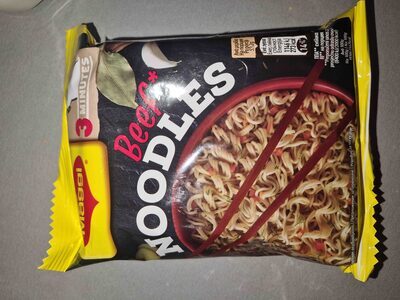
Beef noodles
46
Nutrition Score
Poor

Beef noodles

5201219488794
Starts at 50. Rises with whole foods, proteins, vitamins; drops with added sugars, trans fats, and syrups.
78
Hazard Score
Use with caution
39
Mirella Index
Basic
Quality category: Gourmet (80+), Everyday (50–79), or Basic (0–49)
Ingredients
wheat
wheat  ·  No known concerns
Contains cereals containing gluten
Cereal grain milled into flour for bread, pasta, and baked goods. Contains gluten.
Palm Oil
Palm-Oil  ·  −5 pts
Moderate health concern Source: WHO, EFSA
Widely used vegetable fat. High in saturated fats; linked to cardiovascular risk. Environmental concerns.
Water
Water  ·  No known concerns
The most common ingredient in processed foods.
potato starch
potato starch  ·  No known concerns
Starch extracted from potatoes, used as a thickener and binder in sauces, baked goods, and gluten-free recipes.
Salt (Sodium Chloride)
Salt  ·  −2 pts
Moderate health concern Source: WHO, FDA
Common table salt used for flavouring and preservation. High intake is linked to hypertension.
Potassium Carbonate
E501  ·  No known concerns
Alkaline salt used to regulate acidity and as a raising agent, notably in cocoa processing and noodles.
Sodium Carbonates (Baking Soda)
E500  ·  No known concerns
Common raising agent and acidity regulator. Safe at normal food use levels.
Sugar (Sucrose)
Sugar  ·  −4 pts
Moderate health concern Source: WHO, FDA
Common refined sugar. High consumption is linked to obesity, type 2 diabetes, and tooth decay.
Monosodium Glutamate
E621  ·  −5 pts
Moderate health concern Source: EFSA, FDA
Flavor enhancer. Linked to headaches and sensitivity reactions in high doses.
Disodium Inosinate
E631  ·  −3 pts
Moderate health concern Source: EFSA
Flavour enhancer that boosts umami. Produced from meat or fermented tapioca. Not vegetarian.
Disodium Guanylate
E627  ·  −3 pts
Moderate health concern Source: EFSA
Flavour enhancer often used with MSG to intensify umami taste. Derived from fish or meat.
Garlic
Garlic  ·  No known concerns
Pungent bulb from the allium family, used fresh, dried, or powdered as a flavoring in savory cooking.
Ginger
Ginger  ·  No known concerns
Pungent, spicy root used fresh, dried, or ground in cooking and drinks.
Black Pepper
BlackPepper  ·  No known concerns
Pungent dried berry ground as the world's most common spice, used to season nearly any savory dish.
Celery
Celery  ·  No known concerns
Contains celery
Crunchy stalk vegetable eaten raw or cooked, low in calories. Contains celery allergen.
Parsley
Parsley  ·  No known concerns
Fresh herb used as a garnish and flavoring in a wide range of savory dishes.
Turmeric
Turmeric  ·  No known concerns
Bright yellow spice from a root related to ginger, used in curries and valued for its curcumin content.
Caraway
Caraway  ·  No known concerns
Aromatic seed with a slightly anise-like flavor, used in rye bread, sauerkraut, and some cheeses.
Bay Leaf
BayLeaf  ·  No known concerns
Aromatic leaf from the bay laurel tree, used whole to flavor soups, stews, and sauces, then removed before serving.
Cinnamon
Cinnamon  ·  No known concerns
Warm, sweet spice made from tree bark, used in baking, drinks, and savory dishes.
Dill
Dill  ·  No known concerns
Feathery herb with a mild, tangy flavor, used fresh or dried in pickles, fish dishes, and sauces.
Carrot
Carrot  ·  No known concerns
Crunchy orange root vegetable eaten raw or cooked, a good source of beta-carotene.
Spring Onion
SpringOnion  ·  No known concerns
Young onion harvested before the bulb fully forms, eaten raw or lightly cooked with a mild flavor.
Natural Flavouring
NatFlavour  ·  No known concerns
Catch-all term for flavour compounds derived from natural sources (plants, animals, fermentation).
Caramel Sugar Syrup
Caramel Sugar Syrup  ·  No known concerns
Caramelised sugar syrup used as a sweetener/flavour component, distinct from E150 caramel colourants.
Advertisement
Community Reviews

Please log in to leave a review. Login

Something wrong with this product's data? v