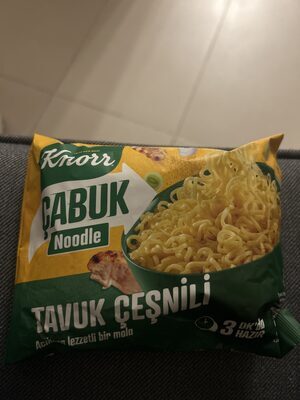
Çabuk Noodle
51
Nutrition Score
Moderate

Çabuk Noodle

8683130112588
Starts at 50. Rises with whole foods, proteins, vitamins; drops with added sugars, trans fats, and syrups.
74
Hazard Score
Use with caution
45
Mirella Index
Basic
Quality category: Gourmet (80+), Everyday (50–79), or Basic (0–49)
Ingredients
wheat
wheat  ·  No known concerns
Contains cereals containing gluten
Cereal grain milled into flour for bread, pasta, and baked goods. Contains gluten.
Palm Oil
Palm-Oil  ·  −5 pts
Moderate health concern Source: WHO, EFSA
Widely used vegetable fat. High in saturated fats; linked to cardiovascular risk. Environmental concerns.
sunflower oil
sunflower oil  ·  No known concerns
Vegetable oil pressed from sunflower seeds, commonly used for cooking and frying due to its light flavor.
Potassium Carbonate
E501  ·  No known concerns
Alkaline salt used to regulate acidity and as a raising agent, notably in cocoa processing and noodles.
Sodium Carbonates (Baking Soda)
E500  ·  No known concerns
Common raising agent and acidity regulator. Safe at normal food use levels.
Polyphosphates
E452  ·  −5 pts
Moderate health concern Source: EFSA
Water-binding phosphate salts used to improve texture and shelf life in processed meat, cheese, and seafood. High phosphate intake is linked to cardiovascular and kidney concerns.
Guar Gum
E412  ·  No known concerns
Natural thickener from guar beans. Used in dairy products, sauces, and gluten-free products.
Riboflavin (Vitamin B2)
E101  ·  No known concerns
Essential B vitamin that also acts as a natural yellow-orange food colorant, added to fortify cereals and dairy alternatives.
Sugar (Sucrose)
Sugar  ·  −4 pts
Moderate health concern Source: WHO, FDA
Common refined sugar. High consumption is linked to obesity, type 2 diabetes, and tooth decay.
Potassium Chloride
E508  ·  No known concerns
Metal halide salt used as a salt substitute and flavor enhancer. Can have a metallic taste.
Monosodium Glutamate
E621  ·  −5 pts
Moderate health concern Source: EFSA, FDA
Flavor enhancer. Linked to headaches and sensitivity reactions in high doses.
Disodium Guanylate
E627  ·  −3 pts
Moderate health concern Source: EFSA
Flavour enhancer often used with MSG to intensify umami taste. Derived from fish or meat.
Natural Flavouring
NatFlavour  ·  No known concerns
Catch-all term for flavour compounds derived from natural sources (plants, animals, fermentation).
Salt (Sodium Chloride)
Salt  ·  −2 pts
Moderate health concern Source: WHO, FDA
Common table salt used for flavouring and preservation. High intake is linked to hypertension.
Starch
Starch  ·  No known concerns
Generic starch, source unspecified on the label (not further identified as corn, potato, wheat, etc).
Garlic
Garlic  ·  No known concerns
Pungent bulb from the allium family, used fresh, dried, or powdered as a flavoring in savory cooking.
White Pepper
White Pepper  ·  No known concerns
White pepper spice, from the same plant as black pepper.
Turmeric
Turmeric  ·  No known concerns
Bright yellow spice from a root related to ginger, used in curries and valued for its curcumin content.
Ginger
Ginger  ·  No known concerns
Pungent, spicy root used fresh, dried, or ground in cooking and drinks.
Fenugreek
Fenugreek  ·  No known concerns
Aromatic seed with a slightly bitter, maple-like flavor, used in curries, spice blends, and herbal teas.
Chicken Meat
ChickenMeat  ·  No known concerns
Poultry meat from chicken, a lean source of protein used fresh, frozen, or processed.
Chicken Fat
ChickenFat  ·  −2 pts
Rendered fat from chicken, used for frying and flavoring in traditional cooking.
Chili / Cayenne
Chili  ·  No known concerns
Hot pepper used fresh, dried, or ground to add heat to dishes.
Community Reviews

Please log in to leave a review. Login

Something wrong with this product's data? v