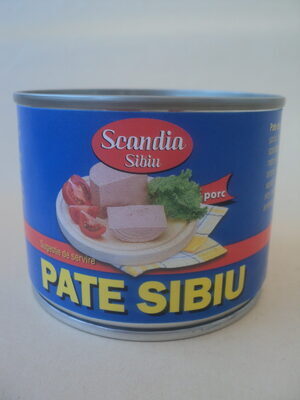
Scandia Pate Sibiu, de porc
14
Nutrition Score
Poor

Scandia Pate Sibiu, de porc

5941341041695
Starts at 50. Rises with whole foods, proteins, vitamins; drops with added sugars, trans fats, and syrups.
45
Hazard Score
Hazardous
2
Mirella Index
Basic
Quality category: Gourmet (80+), Everyday (50–79), or Basic (0–49)
Ingredients
Pork Liver
Pork Liver  ·  No known concerns
Iron-rich organ meat from pigs, used in pâtés, sausages, and traditional dishes.
Pork Fat (Lard)
PorkFat  ·  −3 pts
Moderate health concern Source: EFSA
Rendered pork fat, used in sausages, pâtés and traditional charcuterie.
Water
Water  ·  No known concerns
The most common ingredient in processed foods.
Pigskin (Pork Rind)
Pigskin  ·  −5 pts
Fried or roasted pork skin, eaten as a crunchy snack. High in fat and sodium, low in carbohydrates.
Soya (Soybean)
SoyaIng  ·  −2 pts
Moderate health concern Source: EFSA, FDA
Contains soybeans
Common allergen; also a source of protein and plant-based alternatives. Phytoestrogen content.
Salt (Sodium Chloride)
Salt  ·  −2 pts
Moderate health concern Source: WHO, FDA
Common table salt used for flavouring and preservation. High intake is linked to hypertension.
Sugar (Sucrose)
Sugar  ·  −4 pts
Moderate health concern Source: WHO, FDA
Common refined sugar. High consumption is linked to obesity, type 2 diabetes, and tooth decay.
Onion
Onion  ·  No known concerns
Pungent bulb vegetable used raw or cooked as a base flavoring in savory dishes worldwide.
Wheat Starch
WheatStarch  ·  No known concerns
Contains cereals containing gluten
Starch extracted from wheat, used as a thickener; may retain trace gluten.
Polyphosphates
E452  ·  −5 pts
Moderate health concern Source: EFSA
Water-binding phosphate salts used to improve texture and shelf life in processed meat, cheese, and seafood. High phosphate intake is linked to cardiovascular and kidney concerns.
Glucose Syrup
GlucSyrup  ·  −5 pts
Moderate health concern Source: EFSA, FDA
Refined sweetener from hydrolysed starch. High glycaemic index; linked to blood sugar spikes.
Citric Acid Esters of Mono- and Diglycerides
E472c  ·  −2 pts
Emulsifier used to stabilize fats and oils and prevent separation in margarine and spreads.
Mustard
Mustard  ·  No known concerns
Contains mustard
Pungent condiment made from ground mustard seeds mixed with liquid, used as a spread and flavoring. Contains mustard allergen.
Natural Flavouring
NatFlavour  ·  No known concerns
Catch-all term for flavour compounds derived from natural sources (plants, animals, fermentation).
Monosodium Glutamate
E621  ·  −5 pts
Moderate health concern Source: EFSA, FDA
Flavor enhancer. Linked to headaches and sensitivity reactions in high doses.
Protein (Unspecified Source)
ProteinUnspecified  ·  No known concerns
Protein declared on the label without naming its source.
Xanthan Gum
E415  ·  No known concerns
Thickener and stabilizer produced by bacterial fermentation. Safe in normal food amounts.
Sodium Erythorbate
E316  ·  −2 pts
Antioxidant that prevents discoloration in cured meats and canned foods; chemically similar to vitamin C but not nutritionally active.
Citric Acid
E330  ·  No known concerns
Natural organic acid used as an antioxidant and flavoring. Safe for ingestion.
Carmine (Cochineal extract)
E120  ·  −5 pts
Moderate health concern Source: EFSA
Natural red food coloring derived from crushed insects. Used in strawberry yogurts, sweets, and meats. Known allergen; can trigger asthma or anaphylaxis.
Sodium Nitrite
E250  ·  −15 pts
High health concern Source: IARC
Preservative in cured meats. Its nitrosamine by-products are a key mechanism behind IARC classifying processed meat consumption as Group 1 carcinogenic to humans.
Advertisement
Community Reviews

Please log in to leave a review. Login

Something wrong with this product's data? v