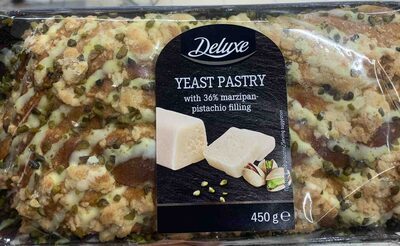
Yeast Pastry With 36% Marzipan-pistachio Filling
34
Nutrition Score
Poor

Yeast Pastry With 36% Marzipan-pistachio Filling

4335619118003
Starts at 50. Rises with whole foods, proteins, vitamins; drops with added sugars, trans fats, and syrups.
64
Hazard Score
Use with caution
36
Mirella Index
Basic
Quality category: Gourmet (80+), Everyday (50–79), or Basic (0–49)
Ingredients
Marzipan
Marzipan  ·  −2 pts
Contains tree nuts
Sweet almond and sugar paste used as a filling or coating in pastries and confectionery.
wheat
wheat  ·  No known concerns
Contains cereals containing gluten
Cereal grain milled into flour for bread, pasta, and baked goods. Contains gluten.
Egg
Egg  ·  No known concerns
Contains eggs
Whole chicken egg, used as a binding, leavening, and enriching ingredient in countless recipes. Contains egg allergen.
Canola Oil (Rapeseed)
CanolaOil  ·  −2 pts
Moderate health concern Source: FDA, EFSA
Vegetable oil derived from a variety of rapeseed. Low in saturated fat, high in monounsaturated fats.
Pistachio
Pistachio  ·  No known concerns
Contains tree nuts
Green-hued tree nut eaten roasted and salted as a snack or used in desserts and confectionery. Contains tree nuts allergen.
High Fructose Corn Syrup
HFCS  ·  −5 pts
Moderate health concern Source: FDA, WHO
Refined sweetener. FDA states it is not more dangerous than other sugars; broad scientific consensus finds no meaningful metabolic difference from sucrose. Still a high-glycaemic added sugar linked to obesity/metabolic risk in excess.
Natural Flavouring
NatFlavour  ·  No known concerns
Catch-all term for flavour compounds derived from natural sources (plants, animals, fermentation).
Sodium Acetates
E262  ·  No known concerns
Sodium salt of acetic acid. Used as seasoning (salt and vinegar flavor) and preservative.
Citric Acid
E330  ·  No known concerns
Natural organic acid used as an antioxidant and flavoring. Safe for ingestion.
Sugar (Sucrose)
Sugar  ·  −4 pts
Moderate health concern Source: WHO, FDA
Common refined sugar. High consumption is linked to obesity, type 2 diabetes, and tooth decay.
Palm Oil
Palm-Oil  ·  −5 pts
Moderate health concern Source: WHO, EFSA
Widely used vegetable fat. High in saturated fats; linked to cardiovascular risk. Environmental concerns.
Water
Water  ·  No known concerns
The most common ingredient in processed foods.
Yeast
Yeast  ·  No known concerns
Single-celled fungus used to ferment dough for bread and beer, or as a nutritional supplement (nutritional yeast).
Mono- and Diglycerides of Fatty Acids
E471  ·  −3 pts
Moderate health concern Source: EFSA, FDA
Common emulsifiers derived from fats. May contain trans fats. Used in bread, margarine, and ice cream.
Sodium Stearoyl Lactylate (SSL)
E481  ·  No known concerns
Emulsifier used in baked goods to improve texture and shelf life. Generally safe.
Lecithin
E322  ·  No known concerns
Natural emulsifier often derived from soy or eggs. Completely safe.
Modified Starch
ModStarch  ·  −2 pts
Moderate health concern Source: EFSA, FDA
Chemically or physically treated starch for improved cooking properties. Generally safe.
Wheat Protein
WheatProtein  ·  No known concerns
Contains cereals containing gluten
Concentrated protein isolated from wheat (also called seitan when cooked), used as a meat alternative. Contains gluten.
Milk Powder (Dried Milk)
MilkPowder  ·  No known concerns
Contains milk
Milk with the water removed, sold as a shelf-stable powder for reconstituting or baking. Contains milk allergen.
Whey Powder (Dried Whey)
WheyPowder  ·  No known concerns
Contains milk
Dried form of whey, the liquid left after cheesemaking, used to add protein and texture to processed foods. Contains milk allergen.
Glucose (Dextrose)
Glucose  ·  −3 pts
Moderate health concern Source: EFSA, FDA
Simple sugar used as a sweetener, energy source, and in food processing. High GI.
Salt (Sodium Chloride)
Salt  ·  −2 pts
Moderate health concern Source: WHO, FDA
Common table salt used for flavouring and preservation. High intake is linked to hypertension.
Xanthan Gum
E415  ·  No known concerns
Thickener and stabilizer produced by bacterial fermentation. Safe in normal food amounts.
Sodium Alginate
E401  ·  No known concerns
Seaweed-derived gelling and thickening agent. Common in molecular gastronomy and dairy products.
Lactose
Lactose  ·  −1 pts
Moderate health concern Source: EFSA, FDA
Contains milk
Milk sugar. Causes digestive issues in people with lactose intolerance.
Diphosphates (Sodium/Potassium)
E450  ·  −5 pts
Moderate health concern Source: EFSA
Water-binding stabilizers heavily used in industrial minced meat and sausages to artificially add weight. High intake may impair calcium absorption.
Sodium Carbonates (Baking Soda)
E500  ·  No known concerns
Common raising agent and acidity regulator. Safe at normal food use levels.
Sodium Phosphate
E339  ·  −2 pts
Phosphate additive; high intake of phosphates is monitored.
Calcium Sulphate
E516  ·  No known concerns
Food-grade plaster used in tofu making and as a firming agent. Safe; adds calcium.
Milk Protein
MilkProtein  ·  No known concerns
Contains milk
Concentrated protein extracted from milk (casein and/or whey), added to boost protein content in processed foods. Contains milk allergen.
Turmeric
Turmeric  ·  No known concerns
Bright yellow spice from a root related to ginger, used in curries and valued for its curcumin content.
Advertisement
Community Reviews

Please log in to leave a review. Login

Something wrong with this product's data? v