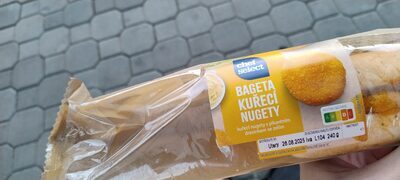
Багета с пилешки нъгети
36
Nutrition Score
Poor

Багета с пилешки нъгети

4335619058743
Starts at 50. Rises with whole foods, proteins, vitamins; drops with added sugars, trans fats, and syrups.
64
Hazard Score
Use with caution
36
Mirella Index
Basic
Quality category: Gourmet (80+), Everyday (50–79), or Basic (0–49)
Ingredients
wheat
wheat  ·  No known concerns
Contains cereals containing gluten
Cereal grain milled into flour for bread, pasta, and baked goods. Contains gluten.
Water
Water  ·  No known concerns
The most common ingredient in processed foods.
Canola Oil (Rapeseed)
CanolaOil  ·  −2 pts
Moderate health concern Source: FDA, EFSA
Vegetable oil derived from a variety of rapeseed. Low in saturated fat, high in monounsaturated fats.
Yeast
Yeast  ·  No known concerns
Single-celled fungus used to ferment dough for bread and beer, or as a nutritional supplement (nutritional yeast).
Soya (Soybean)
SoyaIng  ·  −2 pts
Moderate health concern Source: EFSA, FDA
Contains soybeans
Common allergen; also a source of protein and plant-based alternatives. Phytoestrogen content.
Salt (Sodium Chloride)
Salt  ·  −2 pts
Moderate health concern Source: WHO, FDA
Common table salt used for flavouring and preservation. High intake is linked to hypertension.
Wheat Malt (Malted Wheat Flour)
WheatMalt  ·  No known concerns
Contains cereals containing gluten
Flour milled from malted (germinated) wheat; contributes enzymes, colour and flavour to baked goods.
Barley Malt
Malt  ·  No known concerns
Contains cereals containing gluten
Barley grain sprouted and dried to make a natural sweetener and flavoring. Used in bread, beer, and breakfast cereals; contains gluten.
Sugar (Sucrose)
Sugar  ·  −4 pts
Moderate health concern Source: WHO, FDA
Common refined sugar. High consumption is linked to obesity, type 2 diabetes, and tooth decay.
Enzyme (Unspecified)
EnzymeUnspecified  ·  No known concerns
Processing aid enzyme listed on the label without further specification (common for e.g. amylase in baked goods).
Ascorbic Acid (Vitamin C)
E300  ·  No known concerns
Natural antioxidant vitamin. Used to prevent oxidation in foods and beverages. Safe and beneficial.
Chicken Meat
ChickenMeat  ·  No known concerns
Poultry meat from chicken, a lean source of protein used fresh, frozen, or processed.
Natural Flavouring
NatFlavour  ·  No known concerns
Catch-all term for flavour compounds derived from natural sources (plants, animals, fermentation).
Spices
Spices  ·  No known concerns
General term for dried plant-based seasonings such as pepper, cumin, or cinnamon, used to flavor dishes.
potato starch
potato starch  ·  No known concerns
Starch extracted from potatoes, used as a thickener and binder in sauces, baked goods, and gluten-free recipes.
Glucose (Dextrose)
Glucose  ·  −3 pts
Moderate health concern Source: EFSA, FDA
Simple sugar used as a sweetener, energy source, and in food processing. High GI.
Triphosphates
E451  ·  −5 pts
Moderate health concern Source: EFSA
Industrial moisture-retaining agents in processed meats. Linked to vascular calcification and kidney strain when consumed regularly.
Monosodium Glutamate
E621  ·  −5 pts
Moderate health concern Source: EFSA, FDA
Flavor enhancer. Linked to headaches and sensitivity reactions in high doses.
Modified Starch
ModStarch  ·  −2 pts
Moderate health concern Source: EFSA, FDA
Chemically or physically treated starch for improved cooking properties. Generally safe.
Egg Yolk
EggYolk  ·  No known concerns
Contains eggs
Yolk portion of hen eggs, fresh or dried; natural emulsifier rich in lecithin.
Maltodextrin
MaltodextrinIng  ·  −4 pts
Moderate health concern Source: FDA, EFSA
Highly processed starch derivative. Very high glycaemic index, used as filler and thickener.
Guar Gum
E412  ·  No known concerns
Natural thickener from guar beans. Used in dairy products, sauces, and gluten-free products.
Xanthan Gum
E415  ·  No known concerns
Thickener and stabilizer produced by bacterial fermentation. Safe in normal food amounts.
Locust Bean Gum
E410  ·  No known concerns
Natural thickener from carob seeds. Used in ice cream, cheese, and processed meats.
Onion
Onion  ·  No known concerns
Pungent bulb vegetable used raw or cooked as a base flavoring in savory dishes worldwide.
Sodium Acetates
E262  ·  No known concerns
Sodium salt of acetic acid. Used as seasoning (salt and vinegar flavor) and preservative.
Beta-Carotene
E160a  ·  No known concerns
Natural orange-yellow pigment found in carrots. Acts as a precursor to vitamin A; generally safe.
Tomato Paste
TomatoPaste  ·  No known concerns
Concentrated cooked and strained tomatoes, used as a base for sauces, soups, and stews.
Vinegar
Vinegar  ·  No known concerns
Sour liquid made by fermenting alcohol into acetic acid, used as a preservative and flavoring in dressings and pickles.
Mustard
Mustard  ·  No known concerns
Contains mustard
Pungent condiment made from ground mustard seeds mixed with liquid, used as a spread and flavoring. Contains mustard allergen.
Potassium Sorbate
E202  ·  −2 pts
Moderate health concern Source: EFSA, FDA
Widely used mild preservative to prevent mold. Generally recognized as safe within standard legal limits.
Glucose Syrup
GlucSyrup  ·  −5 pts
Moderate health concern Source: EFSA, FDA
Refined sweetener from hydrolysed starch. High glycaemic index; linked to blood sugar spikes.
Cabbage
Cabbage  ·  No known concerns
Leafy cruciferous vegetable eaten raw in slaws, fermented into sauerkraut, or cooked.
Advertisement
Community Reviews

Please log in to leave a review. Login

Something wrong with this product's data? v