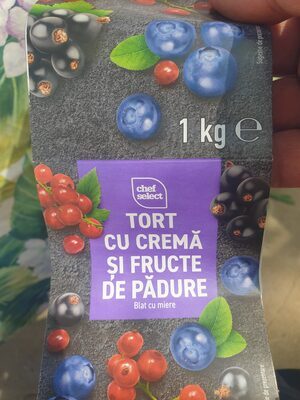
Tort Cu Crema Si Fructe De Padure
67
Nutrition Score
Moderate

Tort Cu Crema Si Fructe De Padure

4056489293705
Starts at 50. Rises with whole foods, proteins, vitamins; drops with added sugars, trans fats, and syrups.
61
Hazard Score
Use with caution
63
Mirella Index
Everyday
Quality category: Gourmet (80+), Everyday (50–79), or Basic (0–49)
Ingredients
Water
Water  ·  No known concerns
The most common ingredient in processed foods.
Sugar (Sucrose)
Sugar  ·  −4 pts
Moderate health concern Source: WHO, FDA
Common refined sugar. High consumption is linked to obesity, type 2 diabetes, and tooth decay.
Milk Powder (Dried Milk)
MilkPowder  ·  No known concerns
Contains milk
Milk with the water removed, sold as a shelf-stable powder for reconstituting or baking. Contains milk allergen.
Whey Powder (Dried Whey)
WheyPowder  ·  No known concerns
Contains milk
Dried form of whey, the liquid left after cheesemaking, used to add protein and texture to processed foods. Contains milk allergen.
Cheese
Cheese  ·  No known concerns
Contains milk
Dairy product; contains milk (allergen).
Tapioca Starch
TapiocaStarch  ·  No known concerns
Starch from cassava root. Gluten-free thickener and binder used in many food products.
Salt (Sodium Chloride)
Salt  ·  −2 pts
Moderate health concern Source: WHO, FDA
Common table salt used for flavouring and preservation. High intake is linked to hypertension.
Fully Hydrogenated Lauric Fat
HydrogLauricFat  ·  No known concerns
Fully hydrogenated lauric (coconut/palm-kernel) fat used in compound coatings.
sunflower oil
sunflower oil  ·  No known concerns
Vegetable oil pressed from sunflower seeds, commonly used for cooking and frying due to its light flavor.
Palm Oil
Palm-Oil  ·  −5 pts
Moderate health concern Source: WHO, EFSA
Widely used vegetable fat. High in saturated fats; linked to cardiovascular risk. Environmental concerns.
Fully Hydrogenated Palm Oil
HydrogPalm  ·  −8 pts
Moderate health concern
Palm oil that has been fully hydrogenated into a solid, shelf-stable fat used in baked goods and spreads. Free of trans fats, but very high in saturated fat.
Modified Starch
ModStarch  ·  −2 pts
Moderate health concern Source: EFSA, FDA
Chemically or physically treated starch for improved cooking properties. Generally safe.
Sodium Alginate
E401  ·  No known concerns
Seaweed-derived gelling and thickening agent. Common in molecular gastronomy and dairy products.
Milk Protein
MilkProtein  ·  No known concerns
Contains milk
Concentrated protein extracted from milk (casein and/or whey), added to boost protein content in processed foods. Contains milk allergen.
Mono- and Diglycerides of Fatty Acids
E471  ·  −3 pts
Moderate health concern Source: EFSA, FDA
Common emulsifiers derived from fats. May contain trans fats. Used in bread, margarine, and ice cream.
Lecithin
E322  ·  No known concerns
Natural emulsifier often derived from soy or eggs. Completely safe.
Diphosphates (Sodium/Potassium)
E450  ·  −5 pts
Moderate health concern Source: EFSA
Water-binding stabilizers heavily used in industrial minced meat and sausages to artificially add weight. High intake may impair calcium absorption.
Potassium Phosphate
E340  ·  −2 pts
Mineral salt used as an acidity regulator and emulsifier in processed cheese, meat, and baked goods.
Sorbitol
E420  ·  −2 pts
Moderate health concern Source: EFSA, FDA
Sugar alcohol used as a sweetener and humectant. Can have a laxative effect in large amounts.
Hydroxypropyl Cellulose
HydroxypropylCellulose  ·  No known concerns
Modified cellulose used as a binder and coating agent.
Riboflavin (Vitamin B2)
E101  ·  No known concerns
Essential B vitamin that also acts as a natural yellow-orange food colorant, added to fortify cereals and dairy alternatives.
Beta-Carotene
E160a  ·  No known concerns
Natural orange-yellow pigment found in carrots. Acts as a precursor to vitamin A; generally safe.
Natural Flavouring
NatFlavour  ·  No known concerns
Catch-all term for flavour compounds derived from natural sources (plants, animals, fermentation).
Blackcurrant
Blackcurrant  ·  No known concerns
Tart, dark purple berry, high in vitamin C, used in juices, jams, and liqueurs.
Redcurrant
Redcurrant  ·  No known concerns
Tart red berry (Ribes rubrum), used in juices, jams and fruit fillings.
Strawberry
Strawberry  ·  No known concerns
Sweet red berry eaten fresh or used in jams, desserts, and drinks.
Blueberry
Blueberry  ·  No known concerns
Small blue-purple berry, sweet and slightly tart, eaten fresh or used in baking and smoothies.
Gelatin
Gelatin  ·  No known concerns
Natural protein derived from animal collagen. Used as a thickener in gummy candies, jelly, and low-fat dairy.
Citric Acid
E330  ·  No known concerns
Natural organic acid used as an antioxidant and flavoring. Safe for ingestion.
Hibiscus
Hibiscus  ·  No known concerns
Herbal flower used for colour/flavour infusions.
Carrot
Carrot  ·  No known concerns
Crunchy orange root vegetable eaten raw or cooked, a good source of beta-carotene.
Potassium Sorbate
E202  ·  −2 pts
Moderate health concern Source: EFSA, FDA
Widely used mild preservative to prevent mold. Generally recognized as safe within standard legal limits.
wheat
wheat  ·  No known concerns
Contains cereals containing gluten
Cereal grain milled into flour for bread, pasta, and baked goods. Contains gluten.
Milk
Milk  ·  No known concerns
Contains milk
Dairy liquid from cows or other mammals, a source of protein and calcium. Contains milk allergen.
Honey
Honey  ·  No known concerns
Natural sweetener made by bees from flower nectar, used in place of sugar in food and drinks.
Egg
Egg  ·  No known concerns
Contains eggs
Whole chicken egg, used as a binding, leavening, and enriching ingredient in countless recipes. Contains egg allergen.
corn starch
corn starch  ·  No known concerns
Powdered starch extracted from corn kernels, used as a thickener in sauces, soups, and baked goods.
Sodium Carbonates (Baking Soda)
E500  ·  No known concerns
Common raising agent and acidity regulator. Safe at normal food use levels.
Tocopherol (Vitamin E)
E306  ·  No known concerns
Natural vitamin E extract used as an antioxidant in fats and oils. Essential nutrient.
Ascorbyl Palmitate
E304  ·  No known concerns
Fat-soluble form of vitamin C, used as an antioxidant to prevent fats and oils from going rancid.
Community Reviews

Please log in to leave a review. Login

Something wrong with this product's data? v