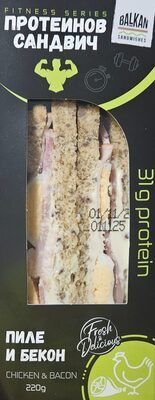
Chicken & Bacon Sandwich
52
Nutrition Score
Moderate

Chicken & Bacon Sandwich

3800501113158
Starts at 50. Rises with whole foods, proteins, vitamins; drops with added sugars, trans fats, and syrups.
27
Hazard Score
Hazardous
30
Mirella Index
Basic
Quality category: Gourmet (80+), Everyday (50–79), or Basic (0–49)
Ingredients
wheat
wheat  ·  No known concerns
Contains cereals containing gluten
Cereal grain milled into flour for bread, pasta, and baked goods. Contains gluten.
Water
Water  ·  No known concerns
The most common ingredient in processed foods.
Sesame Seeds
SesameSeed  ·  No known concerns
Contains sesame
Small oilseeds with a nutty flavor, used whole, ground into tahini, or pressed for oil. Contains sesame allergen.
Sunflower Seeds
SunflowerSeed  ·  No known concerns
Seeds of the sunflower plant, eaten roasted as a snack or pressed for sunflower oil.
Flaxseed
Flaxseed  ·  No known concerns
Small oilseed rich in fiber and omega-3 fatty acids (ALA), eaten whole, ground, or as flaxseed oil.
Sunflower Flour (Defatted Meal)
SunflowerFlour  ·  No known concerns
Defatted, ground sunflower seed meal used as a flour substitute in baking.
Yeast
Yeast  ·  No known concerns
Single-celled fungus used to ferment dough for bread and beer, or as a nutritional supplement (nutritional yeast).
Sugar (Sucrose)
Sugar  ·  −4 pts
Moderate health concern Source: WHO, FDA
Common refined sugar. High consumption is linked to obesity, type 2 diabetes, and tooth decay.
sunflower oil
sunflower oil  ·  No known concerns
Vegetable oil pressed from sunflower seeds, commonly used for cooking and frying due to its light flavor.
Salt (Sodium Chloride)
Salt  ·  −2 pts
Moderate health concern Source: WHO, FDA
Common table salt used for flavouring and preservation. High intake is linked to hypertension.
Enzyme (Unspecified)
EnzymeUnspecified  ·  No known concerns
Processing aid enzyme listed on the label without further specification (common for e.g. amylase in baked goods).
Ascorbic Acid (Vitamin C)
E300  ·  No known concerns
Natural antioxidant vitamin. Used to prevent oxidation in foods and beverages. Safe and beneficial.
Calcium Propionate
E282  ·  −2 pts
Moderate health concern Source: FDA
Antifungal preservative used in sliced breads. May cause behavioral changes or migraines in sensitive children.
Sorbic Acid
E200  ·  −2 pts
Moderate health concern Source: EFSA, FDA
Naturally occurring preservative used in cheeses, wines and baked goods. Generally considered safe.
Sourdough Starter
SourdoughStarter  ·  No known concerns
Live fermentation culture of wild yeast + lactobacilli used to leaven bread.
Barley Malt
Malt  ·  No known concerns
Contains cereals containing gluten
Barley grain sprouted and dried to make a natural sweetener and flavoring. Used in bread, beer, and breakfast cereals; contains gluten.
Sugar Syrup
SugarSyrup  ·  No known concerns
Concentrated solution of sugar in water used as a sweetener.
Bacon
Bacon  ·  −4 pts
Cured and typically smoked pork belly or back, sliced and fried or baked. High in sodium and saturated fat.
Diphosphates (Sodium/Potassium)
E450  ·  −5 pts
Moderate health concern Source: EFSA
Water-binding stabilizers heavily used in industrial minced meat and sausages to artificially add weight. High intake may impair calcium absorption.
Triphosphates
E451  ·  −5 pts
Moderate health concern Source: EFSA
Industrial moisture-retaining agents in processed meats. Linked to vascular calcification and kidney strain when consumed regularly.
Carrageenan
E407  ·  −5 pts
Moderate health concern Source: EFSA
Thickener extracted from red seaweed. Some controversial evidence links degraded types to gut inflammation.
Xanthan Gum
E415  ·  No known concerns
Thickener and stabilizer produced by bacterial fermentation. Safe in normal food amounts.
Modified Starch
ModStarch  ·  −2 pts
Moderate health concern Source: EFSA, FDA
Chemically or physically treated starch for improved cooking properties. Generally safe.
Milk Protein
MilkProtein  ·  No known concerns
Contains milk
Concentrated protein extracted from milk (casein and/or whey), added to boost protein content in processed foods. Contains milk allergen.
Soya (Soybean)
SoyaIng  ·  −2 pts
Moderate health concern Source: EFSA, FDA
Contains soybeans
Common allergen; also a source of protein and plant-based alternatives. Phytoestrogen content.
Sodium Erythorbate
E316  ·  −2 pts
Antioxidant that prevents discoloration in cured meats and canned foods; chemically similar to vitamin C but not nutritionally active.
Glucose (Dextrose)
Glucose  ·  −3 pts
Moderate health concern Source: EFSA, FDA
Simple sugar used as a sweetener, energy source, and in food processing. High GI.
Monosodium Glutamate
E621  ·  −5 pts
Moderate health concern Source: EFSA, FDA
Flavor enhancer. Linked to headaches and sensitivity reactions in high doses.
Wood Smoke (Beechwood)
SmokeFlavouring  ·  −1 pts
Natural smoke from burning wood, used to flavour cured meats; may contain trace PAHs.
Spices
Spices  ·  No known concerns
General term for dried plant-based seasonings such as pepper, cumin, or cinnamon, used to flavor dishes.
Sodium Nitrite
E250  ·  −15 pts
High health concern Source: IARC
Preservative in cured meats. Its nitrosamine by-products are a key mechanism behind IARC classifying processed meat consumption as Group 1 carcinogenic to humans.
Carmine (Cochineal extract)
E120  ·  −5 pts
Moderate health concern Source: EFSA
Natural red food coloring derived from crushed insects. Used in strawberry yogurts, sweets, and meats. Known allergen; can trigger asthma or anaphylaxis.
Plain Caramel
E150a  ·  No known concerns
Natural brown colorant made by heating sugar, used to darken drinks, sauces, and baked goods.
Annatto (Bixin)
E160b  ·  No known concerns
Natural yellow-red dye from the annatto seed. Used in cheeses and margarines. Rare allergy risk.
Wine Vinegar
WineVin  ·  No known concerns
Natural vinegar produced from fermented red wine. Contains trace grape polyphenols.
corn starch
corn starch  ·  No known concerns
Powdered starch extracted from corn kernels, used as a thickener in sauces, soups, and baked goods.
Dried Egg (Egg Powder)
EggPowder  ·  No known concerns
Contains eggs
Whole eggs dehydrated to powder form. Common allergen; used in baked goods and pasta.
Guar Gum
E412  ·  No known concerns
Natural thickener from guar beans. Used in dairy products, sauces, and gluten-free products.
Citric Acid
E330  ·  No known concerns
Natural organic acid used as an antioxidant and flavoring. Safe for ingestion.
Potassium Sorbate
E202  ·  −2 pts
Moderate health concern Source: EFSA, FDA
Widely used mild preservative to prevent mold. Generally recognized as safe within standard legal limits.
Mustard
Mustard  ·  No known concerns
Contains mustard
Pungent condiment made from ground mustard seeds mixed with liquid, used as a spread and flavoring. Contains mustard allergen.
Corn Flour
Cornflour  ·  No known concerns
Finely ground flour milled from whole corn kernels, used in breads, tortillas, and batters.
Natural Flavouring
NatFlavour  ·  No known concerns
Catch-all term for flavour compounds derived from natural sources (plants, animals, fermentation).
Chicken Meat
ChickenMeat  ·  No known concerns
Poultry meat from chicken, a lean source of protein used fresh, frozen, or processed.
Starch
Starch  ·  No known concerns
Generic starch, source unspecified on the label (not further identified as corn, potato, wheat, etc).
Sodium Acetates
E262  ·  No known concerns
Sodium salt of acetic acid. Used as seasoning (salt and vinegar flavor) and preservative.
Polyphosphates
E452  ·  −5 pts
Moderate health concern Source: EFSA
Water-binding phosphate salts used to improve texture and shelf life in processed meat, cheese, and seafood. High phosphate intake is linked to cardiovascular and kidney concerns.
Sodium Ascorbate
E301  ·  No known concerns
Sodium salt of vitamin C. Antioxidant and preservative. Safe and nutritionally beneficial.
Egg
Egg  ·  No known concerns
Contains eggs
Whole chicken egg, used as a binding, leavening, and enriching ingredient in countless recipes. Contains egg allergen.
Cucumber
Cucumber  ·  No known concerns
Crisp, watery vegetable eaten raw in salads or pickled.
Acetic Acid (Glacial)
E260  ·  −2 pts
Moderate health concern Source: FDA
Concentrated acid used to fake traditional fermentation in cheap vinegars (synthetic vinegar). Safe but nutritionally empty.
Community Reviews

Please log in to leave a review. Login

Something wrong with this product's data? v