45
Nutrition Score
Poor

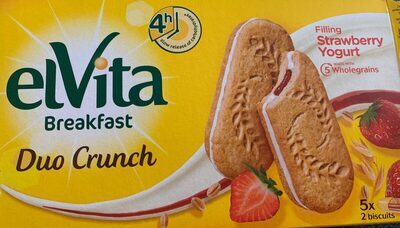
Duo Crunch

7622210982377
Starts at 50. Rises with whole foods, proteins, vitamins; drops with added sugars, trans fats, and syrups.
64
Hazard Score
Use with caution
53
Mirella Index
Everyday
Quality category: Gourmet (80+), Everyday (50–79), or Basic (0–49)
Ingredients
Oats
Oats  ·  No known concerns
Contains cereals containing gluten
Whole grain cereal rich in soluble fibre (beta-glucan).
wheat
wheat  ·  No known concerns
Contains cereals containing gluten
Barley
BarleyFlour  ·  No known concerns
Contains cereals containing gluten
Gluten-containing grain used in bread, soups, and beer production.
Spelt
SpeltFlour  ·  No known concerns
Contains cereals containing gluten
Ancient wheat variety containing gluten. Highly nutritious alternative to modern wheat.
Rye
RyeFlour  ·  No known concerns
Contains cereals containing gluten
Cereal grain containing gluten. Used to make dark rye bread, rich in dietary fiber.
Sugar (Sucrose)
Sugar  ·  −4 pts
Moderate health concern Source: WHO, FDA
Common refined sugar. High consumption is linked to obesity, type 2 diabetes, and tooth decay.
Canola Oil (Rapeseed)
CanolaOil  ·  −2 pts
Moderate health concern Source: FDA, EFSA
Vegetable oil derived from a variety of rapeseed. Low in saturated fat, high in monounsaturated fats.
Palm Oil
Palm-Oil  ·  −5 pts
Moderate health concern Source: WHO, EFSA
Widely used vegetable fat. High in saturated fats; linked to cardiovascular risk. Environmental concerns.
Coconut Oil
CoconutOil  ·  −3 pts
Moderate health concern Source: FDA
Edible oil extracted from the kernel or meat of mature coconuts. High in saturated fat.
Palm Kernel Oil
PalmKernelOil  ·  −5 pts
Moderate health concern
Distinct from palm (fruit) oil — higher saturated fat share.
High Fructose Corn Syrup
HFCS  ·  −5 pts
Moderate health concern Source: FDA, WHO
Refined sweetener. FDA states it is not more dangerous than other sugars; broad scientific consensus finds no meaningful metabolic difference from sucrose. Still a high-glycaemic added sugar linked to obesity/metabolic risk in excess.
Strawberry
Strawberry  ·  No known concerns
Whole berry fruit.
Glycerol (Glycerin)
E422  ·  No known concerns
Humectant used to maintain moisture in cakes, protein bars, and chocolates. Generally safe but can cause mild digestive issues in massive doses.
Wheat Starch
WheatStarch  ·  No known concerns
Contains cereals containing gluten
Native/unmodified starch from wheat.
Yogurt Powder
YogurtPowder  ·  No known concerns
Dehydrated yogurt used as a savoury/tangy flavour base in snacks.
Glucose Syrup
GlucSyrup  ·  −5 pts
Moderate health concern Source: EFSA, FDA
Refined sweetener from hydrolysed starch. High glycaemic index; linked to blood sugar spikes.
Calcium Carbonate
CalciumCarb  ·  No known concerns
Common calcium supplement and anti-caking agent. Found naturally in chalk and limestone.
Magnesium Carbonate
E504  ·  No known concerns
Anti-caking and acidity regulator.
Elemental Iron (Reduced Iron)
ElementalIron  ·  No known concerns
Fine reduced-iron powder used to fortify cereals and baked goods. A different chemical form from ferrous sulphate or iron pyrophosphate; nutritionally serves the same iron-fortification purpose.
Sodium Carbonates (Baking Soda)
E500  ·  No known concerns
Common raising agent and acidity regulator. Safe at normal food use levels.
Diphosphates (Sodium/Potassium)
E450  ·  −5 pts
Moderate health concern Source: EFSA
Water-binding stabilizers heavily used in industrial minced meat and sausages to artificially add weight. High intake may impair calcium absorption.
Ammonium Carbonates
E503  ·  No known concerns
Raising agent used in biscuits and cookies. Decomposes on heating to produce CO2.
Blackberry
Blackberry  ·  No known concerns
Blackberry fruit.
Soy Lecithin
SoyLecithin  ·  No known concerns
Contains soybeans
Emulsifier derived from soybean oil. Widely used in chocolate and baked goods. Generally safe.
Lecithin
E322  ·  No known concerns
Natural emulsifier often derived from soy or eggs. Completely safe.
Citric Acid
E330  ·  No known concerns
Natural organic acid used as an antioxidant and flavoring. Safe for ingestion.
Malic Acid
E296  ·  No known concerns
Natural acid found in apples and pears. Used as acidity regulator and flavour enhancer.
Sodium Citrate
E331  ·  No known concerns
Acidity regulator and emulsifying salt.
Calcium Citrate
E333  ·  No known concerns
Acidity regulator and firming agent.
Salt (Sodium Chloride)
Salt  ·  −2 pts
Moderate health concern Source: WHO, FDA
Common table salt used for flavouring and preservation. High intake is linked to hypertension.
Natural Flavouring
NatFlavour  ·  No known concerns
Catch-all term for flavour compounds derived from natural sources (plants, animals, fermentation).
Pectin
E440  ·  No known concerns
Natural gelling agent from fruit peel. Used in jams, jellies, and fruit-based products. Safe.
Milk Powder (Dried Milk)
MilkPowder  ·  No known concerns
Contains milk
Dehydrated milk solids, fat content unspecified.
Alpha-Tocopherol (Synthetic Vitamin E)
E307  ·  No known concerns
Synthetic form of vitamin E used as an antioxidant in food. Generally safe.
Thiamine (Vitamin B1)
Thiamine  ·  No known concerns
Vitamin B1 for energy metabolism.
Community Reviews

Please log in to leave a review. Login

Something wrong with this product's data? v