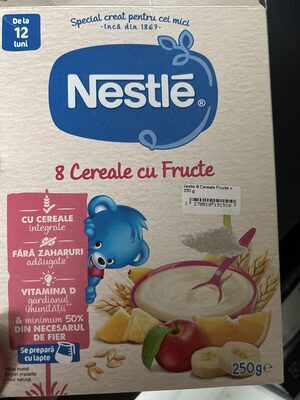
Fulgi
100
Nutrition Score
Nutritious

Fulgi

7613032529376
Starts at 50. Rises with whole foods, proteins, vitamins; drops with added sugars, trans fats, and syrups.
98
Hazard Score
Healthy
100
Mirella Index
Gourmet
Quality category: Gourmet (80+), Everyday (50–79), or Basic (0–49)
Ingredients
wheat
wheat  ·  No known concerns
Contains cereals containing gluten
Cereal grain milled into flour for bread, pasta, and baked goods. Contains gluten.
Honey
Honey  ·  No known concerns
Natural sweetener made by bees from flower nectar, used in place of sugar in food and drinks.
Oats
Oats  ·  No known concerns
Contains cereals containing gluten
Whole grain cereal rich in soluble fibre (beta-glucan).
Barley
BarleyFlour  ·  No known concerns
Contains cereals containing gluten
Gluten-containing grain used in bread, soups, and beer production.
Corn Flour
Cornflour  ·  No known concerns
Finely ground flour milled from whole corn kernels, used in breads, tortillas, and batters.
Rye
RyeFlour  ·  No known concerns
Contains cereals containing gluten
Cereal grain containing gluten. Used to make dark rye bread, rich in dietary fiber.
Spelt
SpeltFlour  ·  No known concerns
Contains cereals containing gluten
Ancient wheat variety containing gluten. Highly nutritious alternative to modern wheat.
Triticale
Triticale  ·  No known concerns
Contains cereals containing gluten
Hybrid grain crossing wheat and rye, used in bread and animal feed. Contains gluten.
Rice
Rice  ·  No known concerns
Staple cereal grain, boiled or steamed and eaten as a side dish or ingredient worldwide.
Canola Oil (Rapeseed)
CanolaOil  ·  −2 pts
Moderate health concern Source: FDA, EFSA
Vegetable oil derived from a variety of rapeseed. Low in saturated fat, high in monounsaturated fats.
sunflower oil
sunflower oil  ·  No known concerns
Vegetable oil pressed from sunflower seeds, commonly used for cooking and frying due to its light flavor.
Calcium Carbonate
CalciumCarb  ·  No known concerns
Common calcium supplement and anti-caking agent. Found naturally in chalk and limestone.
Iron Fumarate
IronFumarate  ·  No known concerns
Iron compound used to fortify foods such as cereals and infant formula.
Zinc Sulfate
Zinc Sulfate  ·  No known concerns
Mineral salt used to fortify foods and supplements with zinc, an essential trace mineral.
Potassium Iodide
PotassiumIodide  ·  No known concerns
Ascorbic Acid (Vitamin C)
E300  ·  No known concerns
Natural antioxidant vitamin. Used to prevent oxidation in foods and beverages. Safe and beneficial.
Alpha-Tocopherol (Synthetic Vitamin E)
E307  ·  No known concerns
Synthetic form of vitamin E used as an antioxidant in food. Generally safe.
Niacin (Vitamin B3)
Niacin  ·  No known concerns
Essential B vitamin involved in energy metabolism, added to fortify flour and cereals.
Thiamine (Vitamin B1)
Thiamine  ·  No known concerns
Essential B vitamin that helps convert food into energy, added to fortify flour, cereals, and supplements.
Retinyl Acetate
RetinylAcetate  ·  No known concerns
Ester form of vitamin A used in fortified foods and supplements.
Vitamin B6 (Pyridoxine)
VitB6  ·  No known concerns
Essential B vitamin involved in protein metabolism and brain development, added to fortify cereals and supplements.
Folic Acid (Vitamin B9)
FolicAcid  ·  No known concerns
Synthetic form of vitamin B9, added to fortify flour and cereals. Important for cell growth and preventing birth defects.
Vitamin D3 (Cholecalciferol)
VitD3  ·  No known concerns
Essential fat-soluble vitamin for bone health and immune function. Added to dairy and plant milks.
Natural Flavouring
NatFlavour  ·  No known concerns
Catch-all term for flavour compounds derived from natural sources (plants, animals, fermentation).
Bifidobacterium
Bifidobacterium  ·  No known concerns
Probiotic bacteria strain added to yogurt and supplements to support gut health.
Advertisement
Community Reviews

Please log in to leave a review. Login

Something wrong with this product's data? v