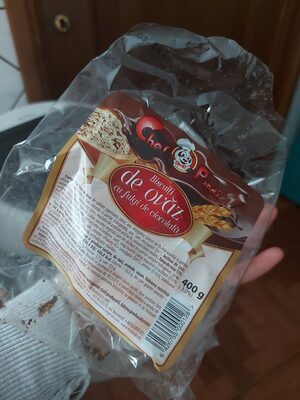
Biscuiți de ovăz cu fulgi de ciocolata
32
Nutrition Score
Poor

Biscuiți de ovăz cu fulgi de ciocolata

6426755000128
Starts at 50. Rises with whole foods, proteins, vitamins; drops with added sugars, trans fats, and syrups.
61
Hazard Score
Use with caution
43
Mirella Index
Basic
Quality category: Gourmet (80+), Everyday (50–79), or Basic (0–49)
Ingredients
wheat
wheat  ·  No known concerns
Contains cereals containing gluten
Cereal grain milled into flour for bread, pasta, and baked goods. Contains gluten.
Sugar (Sucrose)
Sugar  ·  −4 pts
Moderate health concern Source: WHO, FDA
Common refined sugar. High consumption is linked to obesity, type 2 diabetes, and tooth decay.
Water
Water  ·  No known concerns
The most common ingredient in processed foods.
Margarine
Margarine  ·  −2 pts
Spreadable fat made from vegetable oils, used as a butter alternative in baking and on bread. Modern formulations avoid trans fats, though some contain saturated fat.
Partially Hydrogenated Oil
PBO  ·  −15 pts
High health concern Source: FDA, WHO
Source of industrial trans fats. Severely increases LDL cholesterol and cardiac disease risk. Strictly regulated.
Salt (Sodium Chloride)
Salt  ·  −2 pts
Moderate health concern Source: WHO, FDA
Common table salt used for flavouring and preservation. High intake is linked to hypertension.
Mono- and Diglycerides of Fatty Acids
E471  ·  −3 pts
Moderate health concern Source: EFSA, FDA
Common emulsifiers derived from fats. May contain trans fats. Used in bread, margarine, and ice cream.
Soy Lecithin
SoyLecithin  ·  No known concerns
Contains soybeans
Emulsifier derived from soybean oil. Widely used in chocolate and baked goods. Generally safe.
Sorbic Acid
E200  ·  −2 pts
Moderate health concern Source: EFSA, FDA
Naturally occurring preservative used in cheeses, wines and baked goods. Generally considered safe.
Diacetyl (Butter Flavouring)
Diacetyl  ·  −3 pts
Butter-flavour compound; dietary intake is low-risk, occupational inhalation is the known hazard.
Lactic Acid
E270  ·  No known concerns
Natural acid produced by fermentation. Safe preservative and acidity regulator in many foods.
Beta-Carotene
E160a  ·  No known concerns
Natural orange-yellow pigment found in carrots. Acts as a precursor to vitamin A; generally safe.
Vegetable Oil
VegOil  ·  No known concerns
General term for oil pressed from plant sources such as soybean, sunflower, or rapeseed, used for cooking and frying.
Chocolate Flavouring
ChocolateFlavouring  ·  No known concerns
Oat Flour
OatFlour  ·  No known concerns
Contains cereals containing gluten
Whole-grain flour made from finely ground oats. Nutritious and fiber-rich.
Invert Sugar
InvertSugar  ·  −8 pts
Moderate health concern Source: EFSA, FDA
Hydrolysed sucrose syrup used in confectionery.
Fully Hydrogenated Lauric Fat
HydrogLauricFat  ·  No known concerns
Fully hydrogenated lauric (coconut/palm-kernel) fat used in compound coatings.
Cocoa Powder
CocoaPow  ·  No known concerns
Decocoated cocoa solids providing rich chocolate flavor and intense antioxidant flavonoids.
Raisins
Raisins  ·  No known concerns
Dried grapes, eaten as a snack or used in baking and cereals. Naturally high in sugar and fiber.
Sodium Carbonates (Baking Soda)
E500  ·  No known concerns
Common raising agent and acidity regulator. Safe at normal food use levels.
Ammonium Carbonates
E503  ·  No known concerns
Raising agent used in biscuits and cookies. Decomposes on heating to produce CO2.
Xanthan Gum
E415  ·  No known concerns
Thickener and stabilizer produced by bacterial fermentation. Safe in normal food amounts.
Guar Gum
E412  ·  No known concerns
Natural thickener from guar beans. Used in dairy products, sauces, and gluten-free products.
Cinnamon
Cinnamon  ·  No known concerns
Warm, sweet spice made from tree bark, used in baking, drinks, and savory dishes.
Ethyl Vanillin
EthylVanillin  ·  No known concerns
Synthetic aroma compound mimicking vanilla bean flavor. Highly concentrated flavor profile; completely safe for human ingestion.
Starch
Starch  ·  No known concerns
Generic starch, source unspecified on the label (not further identified as corn, potato, wheat, etc).
Citric Acid
E330  ·  No known concerns
Natural organic acid used as an antioxidant and flavoring. Safe for ingestion.
Advertisement
Community Reviews

Please log in to leave a review. Login

Something wrong with this product's data? v