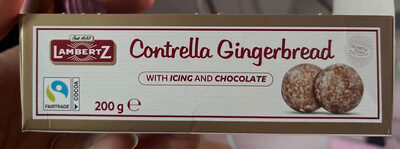
Contrella Gingerbread
28
Nutrition Score
Poor

Contrella Gingerbread

5900658717501
Starts at 50. Rises with whole foods, proteins, vitamins; drops with added sugars, trans fats, and syrups.
59
Hazard Score
Use with caution
67
Mirella Index
Everyday
Quality category: Gourmet (80+), Everyday (50–79), or Basic (0–49)
Ingredients
Sugar (Sucrose)
Sugar  ·  −4 pts
Moderate health concern Source: WHO, FDA
Common refined sugar. High consumption is linked to obesity, type 2 diabetes, and tooth decay.
wheat
wheat  ·  No known concerns
Contains cereals containing gluten
Cereal grain milled into flour for bread, pasta, and baked goods. Contains gluten.
High Fructose Corn Syrup
HFCS  ·  −5 pts
Moderate health concern Source: FDA, WHO
Refined sweetener. FDA states it is not more dangerous than other sugars; broad scientific consensus finds no meaningful metabolic difference from sucrose. Still a high-glycaemic added sugar linked to obesity/metabolic risk in excess.
Glycerol (Glycerin)
E422  ·  No known concerns
Humectant used to maintain moisture in cakes, protein bars, and chocolates. Generally safe but can cause mild digestive issues in massive doses.
Sorbitol
E420  ·  −2 pts
Moderate health concern Source: EFSA, FDA
Sugar alcohol used as a sweetener and humectant. Can have a laxative effect in large amounts.
Cocoa Mass (Liquor)
CocoaMass  ·  No known concerns
Pure ground cocoa beans. The foundational component of high-quality dark chocolate. Rich in polyphenols.
Apricot Kernels
Apricot Kernels  ·  −3 pts
Moderate health concern Source: EFSA
Kernels from apricot stones; contain amygdalin (a cyanogenic glycoside) — EFSA has set intake guidance limiting consumption.
Cocoa Butter
CocoaButter  ·  No known concerns
Natural fat from cocoa beans. Rich in stearic acid; neutral effect on LDL cholesterol.
Fig (Dried)
Fig  ·  No known concerns
Dried fig fruit, used whole or chopped in baked goods.
potato starch
potato starch  ·  No known concerns
Starch extracted from potatoes, used as a thickener and binder in sauces, baked goods, and gluten-free recipes.
Orange
Orange  ·  No known concerns
Citrus fruit eaten fresh or juiced, well known as a source of vitamin C and natural sugars.
Apricot
Apricot  ·  No known concerns
Apricot fruit, whole/dried/pureed — distinct from apricot kernels.
Semolina
Semolina  ·  No known concerns
Contains cereals containing gluten
Coarse flour milled from durum wheat, used for pasta, couscous, and some breads. Contains gluten.
Spices
Spices  ·  No known concerns
General term for dried plant-based seasonings such as pepper, cumin, or cinnamon, used to flavor dishes.
Cinnamon
Cinnamon  ·  No known concerns
Warm, sweet spice made from tree bark, used in baking, drinks, and savory dishes.
Egg
Egg  ·  No known concerns
Contains eggs
Whole chicken egg, used as a binding, leavening, and enriching ingredient in countless recipes. Contains egg allergen.
Apple
Apple  ·  No known concerns
Common tree fruit eaten fresh, dried, or processed into juice and sauce. A source of fiber and vitamin C.
Caramel Sugar Syrup
Caramel Sugar Syrup  ·  No known concerns
Caramelised sugar syrup used as a sweetener/flavour component, distinct from E150 caramel colourants.
Natural Flavouring
NatFlavour  ·  No known concerns
Catch-all term for flavour compounds derived from natural sources (plants, animals, fermentation).
Invert Sugar
InvertSugar  ·  −8 pts
Moderate health concern Source: EFSA, FDA
Hydrolysed sucrose syrup used in confectionery.
Apple Extract
AppleExtract  ·  No known concerns
Concentrated extract from apples, used to add flavor or antioxidant compounds to foods and supplements.
Glucose (Dextrose)
Glucose  ·  −3 pts
Moderate health concern Source: EFSA, FDA
Simple sugar used as a sweetener, energy source, and in food processing. High GI.
Glucose Syrup
GlucSyrup  ·  −5 pts
Moderate health concern Source: EFSA, FDA
Refined sweetener from hydrolysed starch. High glycaemic index; linked to blood sugar spikes.
Salt (Sodium Chloride)
Salt  ·  −2 pts
Moderate health concern Source: WHO, FDA
Common table salt used for flavouring and preservation. High intake is linked to hypertension.
Sodium Carbonates (Baking Soda)
E500  ·  No known concerns
Common raising agent and acidity regulator. Safe at normal food use levels.
sunflower oil
sunflower oil  ·  No known concerns
Vegetable oil pressed from sunflower seeds, commonly used for cooking and frying due to its light flavor.
Canola Oil (Rapeseed)
CanolaOil  ·  −2 pts
Moderate health concern Source: FDA, EFSA
Vegetable oil derived from a variety of rapeseed. Low in saturated fat, high in monounsaturated fats.
Acacia Gum (Gum Arabic)
E414  ·  No known concerns
Natural hardened sap harvested from Acacia trees. Used as an emulsifier and stabilizer in high-end sweets and sodas. High in soluble prebiotic fiber.
Milk Fat (Butterfat)
MilkFat  ·  No known concerns
Contains milk
Natural fat present in milk and dairy products. Essential for traditional butter and rich textures.
Pectin
E440  ·  No known concerns
Natural gelling agent from fruit peel. Used in jams, jellies, and fruit-based products. Safe.
Citric Acid
E330  ·  No known concerns
Natural organic acid used as an antioxidant and flavoring. Safe for ingestion.
Brown Sugar
BrownSugar  ·  −4 pts
Moderate health concern Source: FDA
Sucrose sugar with a distinctive brown color due to the presence of molasses.
Lecithin
E322  ·  No known concerns
Natural emulsifier often derived from soy or eggs. Completely safe.
Potassium Citrate
E332  ·  No known concerns
Salt of citric acid used to regulate acidity and as a preservative in drinks and processed foods.
Whole Milk Powder
WholeMilkPow  ·  No known concerns
Contains milk
Dehydrated whole cow's milk. Contains lactose and casein; allergen for milk-sensitive individuals.
Chocolate
Chocolate  ·  −3 pts
Moderate health concern
Sweet food made from roasted cacao beans, combined with sugar and often milk. High in added sugar and saturated fat in most confectionery forms.
Community Reviews

Please log in to leave a review. Login

Something wrong with this product's data? v