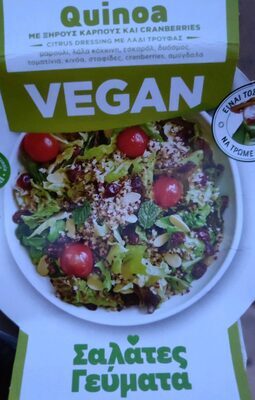
Quinoa Salad
57
Nutrition Score
Moderate

Quinoa Salad

5205461232358
Starts at 50. Rises with whole foods, proteins, vitamins; drops with added sugars, trans fats, and syrups.
63
Hazard Score
Use with caution
77
Mirella Index
Everyday
Quality category: Gourmet (80+), Everyday (50–79), or Basic (0–49)
Ingredients
Lettuce
Lettuce  ·  No known concerns
Leafy salad vegetable, including iceberg lettuce.
Escarole
Escarole  ·  No known concerns
Broad-leaved variety of endive, a leafy salad vegetable of the chicory family.
Mint
Mint  ·  No known concerns
Aromatic herb used fresh or dried to flavor drinks, desserts, and savory dishes.
Quinoa
Quinoa  ·  No known concerns
Protein-rich seed cooked like a grain, popular as a gluten-free alternative to rice or couscous.
sunflower oil
sunflower oil  ·  No known concerns
Vegetable oil pressed from sunflower seeds, commonly used for cooking and frying due to its light flavor.
Lemon
Lemon  ·  No known concerns
Citrus fruit valued for its tart juice and zest, used as a flavoring, acidifier, and source of vitamin C.
Sodium Metabisulphite
E223  ·  −5 pts
Moderate health concern Source: EFSA
Contains sulphites
Sulphite preservative in wine and dried food. Significant asthma and allergy risk.
Olive Oil
OliveOil  ·  No known concerns
Healthy monounsaturated fat from olives. Rich in polyphenols and oleic acid; supports heart health.
High Fructose Corn Syrup
HFCS  ·  −5 pts
Moderate health concern Source: FDA, WHO
Refined sweetener. FDA states it is not more dangerous than other sugars; broad scientific consensus finds no meaningful metabolic difference from sucrose. Still a high-glycaemic added sugar linked to obesity/metabolic risk in excess.
Salt (Sodium Chloride)
Salt  ·  −2 pts
Moderate health concern Source: WHO, FDA
Common table salt used for flavouring and preservation. High intake is linked to hypertension.
Glucose Syrup
GlucSyrup  ·  −5 pts
Moderate health concern Source: EFSA, FDA
Refined sweetener from hydrolysed starch. High glycaemic index; linked to blood sugar spikes.
Xanthan Gum
E415  ·  No known concerns
Thickener and stabilizer produced by bacterial fermentation. Safe in normal food amounts.
Natural Flavouring
NatFlavour  ·  No known concerns
Catch-all term for flavour compounds derived from natural sources (plants, animals, fermentation).
Curcumin
E100  ·  No known concerns
Natural yellow food coloring derived from turmeric root. Safe and beneficial.
Saccharin
E954  ·  −2 pts
Moderate health concern Source: FDA
One of the oldest artificial sweeteners. Avoided historically due to disputed animal testing results.
Mustard
Mustard  ·  No known concerns
Contains mustard
Pungent condiment made from ground mustard seeds mixed with liquid, used as a spread and flavoring. Contains mustard allergen.
Water
Water  ·  No known concerns
The most common ingredient in processed foods.
Vinegar
Vinegar  ·  No known concerns
Sour liquid made by fermenting alcohol into acetic acid, used as a preservative and flavoring in dressings and pickles.
corn starch
corn starch  ·  No known concerns
Powdered starch extracted from corn kernels, used as a thickener in sauces, soups, and baked goods.
Citric Acid
E330  ·  No known concerns
Natural organic acid used as an antioxidant and flavoring. Safe for ingestion.
Acacia Gum (Gum Arabic)
E414  ·  No known concerns
Natural hardened sap harvested from Acacia trees. Used as an emulsifier and stabilizer in high-end sweets and sodas. High in soluble prebiotic fiber.
Beta-Carotene
E160a  ·  No known concerns
Natural orange-yellow pigment found in carrots. Acts as a precursor to vitamin A; generally safe.
Canthaxanthin
E161g  ·  −2 pts
Synthetic/nature-identical orange-red carotenoid colourant. EU intake is restricted; high doses linked to retinal deposits.
Black Truffle
Truffle  ·  No known concerns
Rare, strongly aromatic fungus that grows underground, shaved fresh over dishes or used in oils and sauces.
Chili / Cayenne
Chili  ·  No known concerns
Hot pepper used fresh, dried, or ground to add heat to dishes.
Potassium Sorbate
E202  ·  −2 pts
Moderate health concern Source: EFSA, FDA
Widely used mild preservative to prevent mold. Generally recognized as safe within standard legal limits.
Sodium Benzoate
E211  ·  −5 pts
Moderate health concern Source: FDA, EFSA
Common preservative. Can react with Vitamin C to form benzene (a known carcinogen).
Sulphur Dioxide
E220  ·  −5 pts
Moderate health concern Source: EFSA
Contains sulphites
Preservative used in dried fruits and wine. Can trigger severe respiratory reactions in asthmatics.
Mandarin (Tangerine)
Mandarin  ·  No known concerns
Small, easy-to-peel citrus fruit, sweeter than an orange, eaten fresh or canned.
Sugar (Sucrose)
Sugar  ·  −4 pts
Moderate health concern Source: WHO, FDA
Common refined sugar. High consumption is linked to obesity, type 2 diabetes, and tooth decay.
Orange
Orange  ·  No known concerns
Citrus fruit eaten fresh or juiced, well known as a source of vitamin C and natural sugars.
Cherry Tomatoes
CherryTomato  ·  No known concerns
Small, sweet tomato variety eaten whole in salads or roasted.
Raisins
Raisins  ·  No known concerns
Dried grapes, eaten as a snack or used in baking and cereals. Naturally high in sugar and fiber.
Cranberry
Cranberry  ·  No known concerns
Tart red berry, usually processed into juice, sauce, or dried snacks.
Almond
Almond  ·  No known concerns
Contains tree nuts
Almond, a tree nut eaten whole, roasted, or ground into flour and butter; also pressed for almond milk. Contains tree nut allergen.
Advertisement
Community Reviews

Please log in to leave a review. Login

Something wrong with this product's data? v