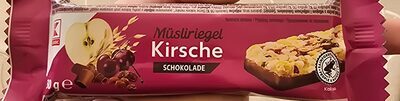
Müsliriegel Kirsche Schokolade
71
Nutrition Score
Moderate

Müsliriegel Kirsche Schokolade

4337185508509
Starts at 50. Rises with whole foods, proteins, vitamins; drops with added sugars, trans fats, and syrups.
79
Hazard Score
Use with caution
95
Mirella Index
Gourmet
Quality category: Gourmet (80+), Everyday (50–79), or Basic (0–49)
Ingredients
Glucose Syrup
GlucSyrup  ·  −5 pts
Moderate health concern Source: EFSA, FDA
Refined sweetener from hydrolysed starch. High glycaemic index; linked to blood sugar spikes.
Chocolate
Chocolate  ·  −3 pts
Moderate health concern
Sweet food made from roasted cacao beans, combined with sugar and often milk. High in added sugar and saturated fat in most confectionery forms.
Sugar (Sucrose)
Sugar  ·  −4 pts
Moderate health concern Source: WHO, FDA
Common refined sugar. High consumption is linked to obesity, type 2 diabetes, and tooth decay.
Cocoa Butter
CocoaButter  ·  No known concerns
Natural fat from cocoa beans. Rich in stearic acid; neutral effect on LDL cholesterol.
Whole Milk Powder
WholeMilkPow  ·  No known concerns
Contains milk
Dehydrated whole cow's milk. Contains lactose and casein; allergen for milk-sensitive individuals.
Cocoa Powder
CocoaPow  ·  No known concerns
Decocoated cocoa solids providing rich chocolate flavor and intense antioxidant flavonoids.
Lecithin
E322  ·  No known concerns
Natural emulsifier often derived from soy or eggs. Completely safe.
Polyglycerol Polyricinoleate (PGPR)
E476  ·  −2 pts
Moderate health concern Source: EFSA, FDA
Emulsifier in chocolate used to reduce viscosity and replace cocoa butter. Generally safe.
Oats
Oats  ·  No known concerns
Contains cereals containing gluten
Whole grain cereal rich in soluble fibre (beta-glucan).
Raisins
Raisins  ·  No known concerns
Dried grapes, eaten as a snack or used in baking and cereals. Naturally high in sugar and fiber.
sunflower oil
sunflower oil  ·  No known concerns
Vegetable oil pressed from sunflower seeds, commonly used for cooking and frying due to its light flavor.
Semolina
Semolina  ·  No known concerns
Contains cereals containing gluten
Coarse flour milled from durum wheat, used for pasta, couscous, and some breads. Contains gluten.
Rice Flour
RiceFlour  ·  No known concerns
Flour milled from rice grains; common gluten-free cereal flour.
wheat
wheat  ·  No known concerns
Contains cereals containing gluten
Cereal grain milled into flour for bread, pasta, and baked goods. Contains gluten.
Rye
RyeFlour  ·  No known concerns
Contains cereals containing gluten
Cereal grain containing gluten. Used to make dark rye bread, rich in dietary fiber.
Barley Malt
Malt  ·  No known concerns
Contains cereals containing gluten
Barley grain sprouted and dried to make a natural sweetener and flavoring. Used in bread, beer, and breakfast cereals; contains gluten.
Wheat Fibre
WheatFibre  ·  No known concerns
Contains cereals containing gluten
Insoluble dietary fibre from wheat bran/stalks; some processed forms are gluten-free.
Corn Flour
Cornflour  ·  No known concerns
Finely ground flour milled from whole corn kernels, used in breads, tortillas, and batters.
Salt (Sodium Chloride)
Salt  ·  −2 pts
Moderate health concern Source: WHO, FDA
Common table salt used for flavouring and preservation. High intake is linked to hypertension.
Potassium Iodate
Potassium Iodate  ·  No known concerns
Iodine-fortification agent added to table salt (iodized salt) for public-health iodine sufficiency.
Calcium Carbonate
CalciumCarb  ·  No known concerns
Common calcium supplement and anti-caking agent. Found naturally in chalk and limestone.
High Fructose Corn Syrup
HFCS  ·  −5 pts
Moderate health concern Source: FDA, WHO
Refined sweetener. FDA states it is not more dangerous than other sugars; broad scientific consensus finds no meaningful metabolic difference from sucrose. Still a high-glycaemic added sugar linked to obesity/metabolic risk in excess.
Vegetable Oil
VegOil  ·  No known concerns
General term for oil pressed from plant sources such as soybean, sunflower, or rapeseed, used for cooking and frying.
Apple
Apple  ·  No known concerns
Common tree fruit eaten fresh, dried, or processed into juice and sauce. A source of fiber and vitamin C.
Sour Cherry
Sour Cherry  ·  No known concerns
Tart variety of cherry used mainly in baking, preserves, and juices rather than eaten fresh.
Glycerol (Glycerin)
E422  ·  No known concerns
Humectant used to maintain moisture in cakes, protein bars, and chocolates. Generally safe but can cause mild digestive issues in massive doses.
Pectin
E440  ·  No known concerns
Natural gelling agent from fruit peel. Used in jams, jellies, and fruit-based products. Safe.
Blackcurrant
Blackcurrant  ·  No known concerns
Tart, dark purple berry, high in vitamin C, used in juices, jams, and liqueurs.
Blueberry
Blueberry  ·  No known concerns
Small blue-purple berry, sweet and slightly tart, eaten fresh or used in baking and smoothies.
Carrot
Carrot  ·  No known concerns
Crunchy orange root vegetable eaten raw or cooked, a good source of beta-carotene.
Malic Acid
E296  ·  No known concerns
Natural acid found in apples and pears. Used as acidity regulator and flavour enhancer.
Natural Flavouring
NatFlavour  ·  No known concerns
Catch-all term for flavour compounds derived from natural sources (plants, animals, fermentation).
Citric Acid
E330  ·  No known concerns
Natural organic acid used as an antioxidant and flavoring. Safe for ingestion.
Advertisement
Community Reviews

Please log in to leave a review. Login

Something wrong with this product's data? v