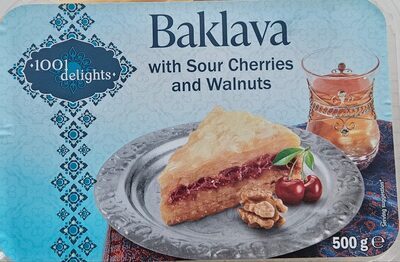
Baklava With Sour Cherries And Walnuts
40
Nutrition Score
Poor

Baklava With Sour Cherries And Walnuts

4056489611295
Starts at 50. Rises with whole foods, proteins, vitamins; drops with added sugars, trans fats, and syrups.
78
Hazard Score
Use with caution
48
Mirella Index
Basic
Quality category: Gourmet (80+), Everyday (50–79), or Basic (0–49)
Ingredients
Sugar (Sucrose)
Sugar  ·  −4 pts
Moderate health concern Source: WHO, FDA
Common refined sugar. High consumption is linked to obesity, type 2 diabetes, and tooth decay.
Water
Water  ·  No known concerns
The most common ingredient in processed foods.
Glucose Syrup
GlucSyrup  ·  −5 pts
Moderate health concern Source: EFSA, FDA
Refined sweetener from hydrolysed starch. High glycaemic index; linked to blood sugar spikes.
Citric Acid
E330  ·  No known concerns
Natural organic acid used as an antioxidant and flavoring. Safe for ingestion.
Vanilla Extract
VanillaExt  ·  No known concerns
Flavoring made by soaking vanilla pods in alcohol, used to add sweetness and aroma to baked goods and desserts.
Sour Cherry
Sour Cherry  ·  No known concerns
Tart variety of cherry used mainly in baking, preserves, and juices rather than eaten fresh.
Modified Starch
ModStarch  ·  −2 pts
Moderate health concern Source: EFSA, FDA
Chemically or physically treated starch for improved cooking properties. Generally safe.
Potassium Sorbate
E202  ·  −2 pts
Moderate health concern Source: EFSA, FDA
Widely used mild preservative to prevent mold. Generally recognized as safe within standard legal limits.
Black Carrot Concentrate
BlackCarrot  ·  No known concerns
Concentrated juice from purple-black carrots, used as a natural purple-red food colorant.
wheat
wheat  ·  No known concerns
Contains cereals containing gluten
Cereal grain milled into flour for bread, pasta, and baked goods. Contains gluten.
Walnut
Walnut  ·  No known concerns
Contains tree nuts
Wrinkled tree nut with a rich, slightly bitter flavor, eaten whole or used in baking. Contains tree nut allergen.
Vegetable Oil
VegOil  ·  No known concerns
General term for oil pressed from plant sources such as soybean, sunflower, or rapeseed, used for cooking and frying.
Palm Oil
Palm-Oil  ·  −5 pts
Moderate health concern Source: WHO, EFSA
Widely used vegetable fat. High in saturated fats; linked to cardiovascular risk. Environmental concerns.
sunflower oil
sunflower oil  ·  No known concerns
Vegetable oil pressed from sunflower seeds, commonly used for cooking and frying due to its light flavor.
Breadcrumbs
Breadcrumbs  ·  No known concerns
Dried, crumbled bread used as a coating for fried foods or a binder in meatballs and stuffing.
Salt (Sodium Chloride)
Salt  ·  −2 pts
Moderate health concern Source: WHO, FDA
Common table salt used for flavouring and preservation. High intake is linked to hypertension.
Yeast
Yeast  ·  No known concerns
Single-celled fungus used to ferment dough for bread and beer, or as a nutritional supplement (nutritional yeast).
Semolina
Semolina  ·  No known concerns
Contains cereals containing gluten
Coarse flour milled from durum wheat, used for pasta, couscous, and some breads. Contains gluten.
corn starch
corn starch  ·  No known concerns
Powdered starch extracted from corn kernels, used as a thickener in sauces, soups, and baked goods.
Calcium Propionate
E282  ·  −2 pts
Moderate health concern Source: FDA
Antifungal preservative used in sliced breads. May cause behavioral changes or migraines in sensitive children.
L-Cysteine
E920  ·  No known concerns
Amino acid used as a dough conditioner to improve elasticity in commercial bread. Often derived from feathers, hair, or synthesized microbially.
Natural Flavouring
NatFlavour  ·  No known concerns
Catch-all term for flavour compounds derived from natural sources (plants, animals, fermentation).
Beta-Carotene
E160a  ·  No known concerns
Natural orange-yellow pigment found in carrots. Acts as a precursor to vitamin A; generally safe.
Advertisement
Community Reviews

Please log in to leave a review. Login

Something wrong with this product's data? v