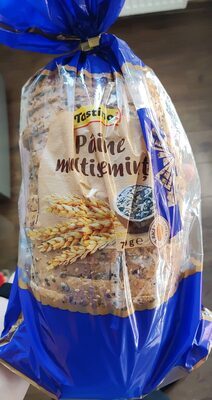
Paine seminente
88
Nutrition Score
Nutritious

Paine seminente

4056489166399
Starts at 50. Rises with whole foods, proteins, vitamins; drops with added sugars, trans fats, and syrups.
85
Hazard Score
Healthy
86
Mirella Index
Gourmet
Quality category: Gourmet (80+), Everyday (50–79), or Basic (0–49)
Ingredients
wheat
wheat  ·  No known concerns
Contains cereals containing gluten
Cereal grain milled into flour for bread, pasta, and baked goods. Contains gluten.
Water
Water  ·  No known concerns
The most common ingredient in processed foods.
Sunflower Seeds
SunflowerSeed  ·  No known concerns
Seeds of the sunflower plant, eaten roasted as a snack or pressed for sunflower oil.
Flaxseed
Flaxseed  ·  No known concerns
Small oilseed rich in fiber and omega-3 fatty acids (ALA), eaten whole, ground, or as flaxseed oil.
Sesame Seeds
SesameSeed  ·  No known concerns
Contains sesame
Small oilseeds with a nutty flavor, used whole, ground into tahini, or pressed for oil. Contains sesame allergen.
Millet
Millet  ·  No known concerns
Small, gluten-free cereal grain cooked like rice or ground into flour, a staple in parts of Africa and Asia.
Chia Seeds
ChiaSeed  ·  No known concerns
Tiny seeds that form a gel when soaked in liquid, high in fiber and omega-3s, used in puddings and as an egg substitute.
Poppy Seeds
PoppySeed  ·  No known concerns
Tiny, crunchy seeds from the poppy plant, used in baking and as a topping for breads and pastries.
Gluten
GlutenIng  ·  −3 pts
Moderate health concern Source: EFSA, FDA
Contains cereals containing gluten
Protein complex in wheat, rye and barley. Causes coeliac disease in ~1% of population.
Yeast
Yeast  ·  No known concerns
Single-celled fungus used to ferment dough for bread and beer, or as a nutritional supplement (nutritional yeast).
Salt (Sodium Chloride)
Salt  ·  −2 pts
Moderate health concern Source: WHO, FDA
Common table salt used for flavouring and preservation. High intake is linked to hypertension.
Rye
RyeFlour  ·  No known concerns
Contains cereals containing gluten
Cereal grain containing gluten. Used to make dark rye bread, rich in dietary fiber.
Live Probiotic Cultures
ProbioticCultures  ·  No known concerns
Live beneficial bacterial cultures added to foods.
Lactic Acid
E270  ·  No known concerns
Natural acid produced by fermentation. Safe preservative and acidity regulator in many foods.
Acetic Acid (Glacial)
E260  ·  −2 pts
Moderate health concern Source: FDA
Concentrated acid used to fake traditional fermentation in cheap vinegars (synthetic vinegar). Safe but nutritionally empty.
Wheat Malt (Malted Wheat Flour)
WheatMalt  ·  No known concerns
Contains cereals containing gluten
Flour milled from malted (germinated) wheat; contributes enzymes, colour and flavour to baked goods.
Barley Malt
Malt  ·  No known concerns
Contains cereals containing gluten
Barley grain sprouted and dried to make a natural sweetener and flavoring. Used in bread, beer, and breakfast cereals; contains gluten.
Calcium Propionate
E282  ·  −2 pts
Moderate health concern Source: FDA
Antifungal preservative used in sliced breads. May cause behavioral changes or migraines in sensitive children.
Sorbic Acid
E200  ·  −2 pts
Moderate health concern Source: EFSA, FDA
Naturally occurring preservative used in cheeses, wines and baked goods. Generally considered safe.
Soya (Soybean)
SoyaIng  ·  −2 pts
Moderate health concern Source: EFSA, FDA
Contains soybeans
Common allergen; also a source of protein and plant-based alternatives. Phytoestrogen content.
Ascorbic Acid (Vitamin C)
E300  ·  No known concerns
Natural antioxidant vitamin. Used to prevent oxidation in foods and beverages. Safe and beneficial.
Advertisement
Community Reviews

Please log in to leave a review. Login

Something wrong with this product's data? v