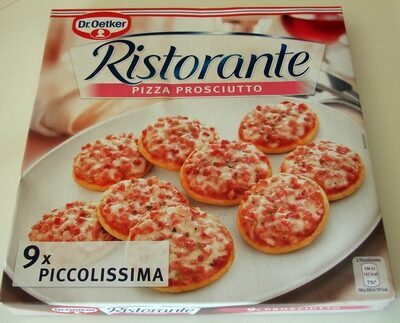
Ristorante Piccolissima Prosciutto
66
Nutrition Score
Moderate

Ristorante Piccolissima Prosciutto

4001724017547
Starts at 50. Rises with whole foods, proteins, vitamins; drops with added sugars, trans fats, and syrups.
66
Hazard Score
Use with caution
70
Mirella Index
Everyday
Quality category: Gourmet (80+), Everyday (50–79), or Basic (0–49)
Ingredients
Tomato Paste
TomatoPaste  ·  No known concerns
Concentrated cooked and strained tomatoes, used as a base for sauces, soups, and stews.
wheat
wheat  ·  No known concerns
Contains cereals containing gluten
Cereal grain milled into flour for bread, pasta, and baked goods. Contains gluten.
Cheese
Cheese  ·  No known concerns
Contains milk
Dairy product; contains milk (allergen).
Mozzarella
Mozzarella  ·  No known concerns
Soft, mild Italian cheese, traditionally made from buffalo or cow's milk, popular on pizza and in salads.
Emmental Cheese
Emmental  ·  −3 pts
Swiss cheese known for its large holes and mild, nutty flavor, eaten sliced or melted.
fiambre cozinhado
No known concerns
Pork Meat
PorkMeat  ·  No known concerns
Whole animal protein. Base component of traditional minced meat and sausages.
Salt (Sodium Chloride)
Salt  ·  −2 pts
Moderate health concern Source: WHO, FDA
Common table salt used for flavouring and preservation. High intake is linked to hypertension.
Glucose (Dextrose)
Glucose  ·  −3 pts
Moderate health concern Source: EFSA, FDA
Simple sugar used as a sweetener, energy source, and in food processing. High GI.
Sugar (Sucrose)
Sugar  ·  −4 pts
Moderate health concern Source: WHO, FDA
Common refined sugar. High consumption is linked to obesity, type 2 diabetes, and tooth decay.
estabilizadores
No known concerns
difosfatos e trifosfatos
No known concerns
Sodium Nitrite
E250  ·  −15 pts
High health concern Source: IARC
Preservative in cured meats. Its nitrosamine by-products are a key mechanism behind IARC classifying processed meat consumption as Group 1 carcinogenic to humans.
antioxidante
No known concerns
Rosemary Extract
E392  ·  No known concerns
Natural antioxidant derived from rosemary, used to extend shelf life in oils and processed meats.
fumo
No known concerns
Water
Water  ·  No known concerns
The most common ingredient in processed foods.
Canola Oil (Rapeseed)
CanolaOil  ·  −2 pts
Moderate health concern Source: FDA, EFSA
Vegetable oil derived from a variety of rapeseed. Low in saturated fat, high in monounsaturated fats.
Yeast
Yeast  ·  No known concerns
Single-celled fungus used to ferment dough for bread and beer, or as a nutritional supplement (nutritional yeast).
Semolina
Semolina  ·  No known concerns
Contains cereals containing gluten
Coarse flour milled from durum wheat, used for pasta, couscous, and some breads. Contains gluten.
plantas aromáticas
No known concerns
Barley Malt
Malt  ·  No known concerns
Contains cereals containing gluten
Barley grain sprouted and dried to make a natural sweetener and flavoring. Used in bread, beer, and breakfast cereals; contains gluten.
Onion
Onion  ·  No known concerns
Pungent bulb vegetable used raw or cooked as a base flavoring in savory dishes worldwide.
Bell Pepper
BellPepper  ·  No known concerns
Sweet pepper variety eaten raw or cooked, available in green, red, yellow, and orange. High in vitamin C.
Garlic
Garlic  ·  No known concerns
Pungent bulb from the allium family, used fresh, dried, or powdered as a flavoring in savory cooking.
levedante
No known concerns
Sodium Carbonates (Baking Soda)
E500  ·  No known concerns
Common raising agent and acidity regulator. Safe at normal food use levels.
regulador de acidez
No known concerns
Diphosphates (Sodium/Potassium)
E450  ·  −5 pts
Moderate health concern Source: EFSA
Water-binding stabilizers heavily used in industrial minced meat and sausages to artificially add weight. High intake may impair calcium absorption.
Community Reviews

Please log in to leave a review. Login

Something wrong with this product's data? v