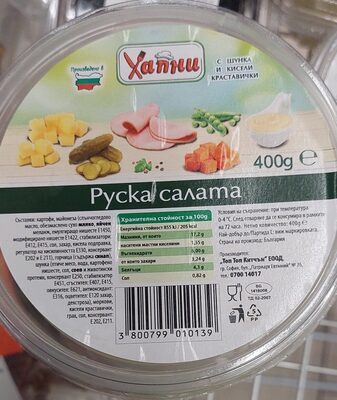
Руска Салата
42
Nutrition Score
Poor

Руска Салата

3800799010139
Starts at 50. Rises with whole foods, proteins, vitamins; drops with added sugars, trans fats, and syrups.
38
Hazard Score
Hazardous
21
Mirella Index
Basic
Quality category: Gourmet (80+), Everyday (50–79), or Basic (0–49)
Ingredients
Potato
Potato  ·  No known concerns
Starchy root vegetable eaten boiled, baked, fried, or mashed, a staple food in many cuisines.
Mayonnaise
Mayonnaise  ·  −2 pts
Creamy condiment made by emulsifying oil, egg yolk, and an acid such as vinegar or lemon juice.
sunflower oil
sunflower oil  ·  No known concerns
Vegetable oil pressed from sunflower seeds, commonly used for cooking and frying due to its light flavor.
Milk Powder (Dried Milk)
MilkPowder  ·  No known concerns
Contains milk
Milk with the water removed, sold as a shelf-stable powder for reconstituting or baking. Contains milk allergen.
Egg
Egg  ·  No known concerns
Contains eggs
Whole chicken egg, used as a binding, leavening, and enriching ingredient in countless recipes. Contains egg allergen.
Starch Sodium Octenyl Succinate
E1450  ·  −2 pts
Modified starch (flavour encapsulation, OSA).
Acetylated Distarch Adipate
E1422  ·  −2 pts
Moderate health concern Source: EFSA
Chemically altered starch used as a thickener in processed sauces, fruit fillings, and dairy. Safe but highly processed empty calorie carbohydrate.
Guar Gum
E412  ·  No known concerns
Natural thickener from guar beans. Used in dairy products, sauces, and gluten-free products.
Xanthan Gum
E415  ·  No known concerns
Thickener and stabilizer produced by bacterial fermentation. Safe in normal food amounts.
Salt (Sodium Chloride)
Salt  ·  −2 pts
Moderate health concern Source: WHO, FDA
Common table salt used for flavouring and preservation. High intake is linked to hypertension.
Sugar (Sucrose)
Sugar  ·  −4 pts
Moderate health concern Source: WHO, FDA
Common refined sugar. High consumption is linked to obesity, type 2 diabetes, and tooth decay.
Natural Flavouring
NatFlavour  ·  No known concerns
Catch-all term for flavour compounds derived from natural sources (plants, animals, fermentation).
Citric Acid
E330  ·  No known concerns
Natural organic acid used as an antioxidant and flavoring. Safe for ingestion.
Potassium Sorbate
E202  ·  −2 pts
Moderate health concern Source: EFSA, FDA
Widely used mild preservative to prevent mold. Generally recognized as safe within standard legal limits.
Sodium Benzoate
E211  ·  −5 pts
Moderate health concern Source: FDA, EFSA
Common preservative. Can react with Vitamin C to form benzene (a known carcinogen).
Mustard
Mustard  ·  No known concerns
Contains mustard
Pungent condiment made from ground mustard seeds mixed with liquid, used as a spread and flavoring. Contains mustard allergen.
Ham (Cured Pork)
Ham  ·  −3 pts
Cured pork product, including raw/dry-cured ham (prosciutto crudo).
Poultry Meat (Unspecified Species)
PoultryMeatUnspecified  ·  No known concerns
Meat from an unspecified bird species, as declared on the label (e.g. processed meat products using mixed/unnamed poultry).
Water
Water  ·  No known concerns
The most common ingredient in processed foods.
potato starch
potato starch  ·  No known concerns
Starch extracted from potatoes, used as a thickener and binder in sauces, baked goods, and gluten-free recipes.
Soy Protein Isolate
SoyProteinIso  ·  No known concerns
Contains soybeans
Purified soy protein used as a meat extender or nutritional additive.
Animal Protein (Unspecified Species)
AnimalProteinUnspecified  ·  No known concerns
Protein of animal origin declared on the label without naming the specific animal species used.
Sodium Nitrite
E250  ·  −15 pts
High health concern Source: IARC
Preservative in cured meats. Its nitrosamine by-products are a key mechanism behind IARC classifying processed meat consumption as Group 1 carcinogenic to humans.
Triphosphates
E451  ·  −5 pts
Moderate health concern Source: EFSA
Industrial moisture-retaining agents in processed meats. Linked to vascular calcification and kidney strain when consumed regularly.
Carrageenan
E407  ·  −5 pts
Moderate health concern Source: EFSA
Thickener extracted from red seaweed. Some controversial evidence links degraded types to gut inflammation.
Monosodium Glutamate
E621  ·  −5 pts
Moderate health concern Source: EFSA, FDA
Flavor enhancer. Linked to headaches and sensitivity reactions in high doses.
Sodium Erythorbate
E316  ·  −2 pts
Antioxidant that prevents discoloration in cured meats and canned foods; chemically similar to vitamin C but not nutritionally active.
Carmine (Cochineal extract)
E120  ·  −5 pts
Moderate health concern Source: EFSA
Natural red food coloring derived from crushed insects. Used in strawberry yogurts, sweets, and meats. Known allergen; can trigger asthma or anaphylaxis.
Glucose (Dextrose)
Glucose  ·  −3 pts
Moderate health concern Source: EFSA, FDA
Simple sugar used as a sweetener, energy source, and in food processing. High GI.
Carrot
Carrot  ·  No known concerns
Crunchy orange root vegetable eaten raw or cooked, a good source of beta-carotene.
Cucumber
Cucumber  ·  No known concerns
Crisp, watery vegetable eaten raw in salads or pickled.
Peas
Peas  ·  No known concerns
Small round legume seeds, eaten fresh, frozen, or dried. A good source of plant protein and fiber.
Advertisement
Community Reviews

Please log in to leave a review. Login

Something wrong with this product's data? v