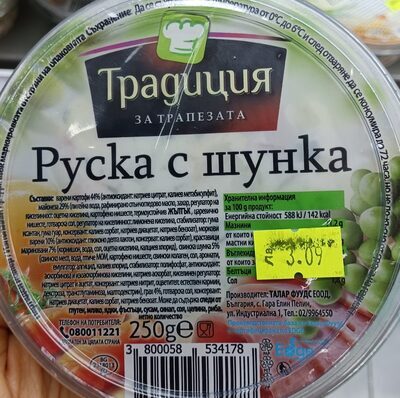
традиция
33
Nutrition Score
Poor

традиция

3800058534178
Starts at 50. Rises with whole foods, proteins, vitamins; drops with added sugars, trans fats, and syrups.
32
Hazard Score
Hazardous
15
Mirella Index
Basic
Quality category: Gourmet (80+), Everyday (50–79), or Basic (0–49)
Ingredients
Potato
Potato  ·  No known concerns
Starchy root vegetable eaten boiled, baked, fried, or mashed, a staple food in many cuisines.
Sodium Citrate
E331  ·  No known concerns
Salt of citric acid used to control acidity and as an emulsifier in processed cheese, drinks, and desserts.
Potassium Metabisulfite
E224  ·  −5 pts
Moderate health concern Source: EFSA
Contains sulphites
Chemical preservative used in commercial vinegars and wines to prevent oxidation. Can release sulfur dioxide, triggering heavy asthmatic/allergic attacks.
Mayonnaise
Mayonnaise  ·  −2 pts
Creamy condiment made by emulsifying oil, egg yolk, and an acid such as vinegar or lemon juice.
Water
Water  ·  No known concerns
The most common ingredient in processed foods.
sunflower oil
sunflower oil  ·  No known concerns
Vegetable oil pressed from sunflower seeds, commonly used for cooking and frying due to its light flavor.
Sugar (Sucrose)
Sugar  ·  −4 pts
Moderate health concern Source: WHO, FDA
Common refined sugar. High consumption is linked to obesity, type 2 diabetes, and tooth decay.
Acetic Acid (Glacial)
E260  ·  −2 pts
Moderate health concern Source: FDA
Concentrated acid used to fake traditional fermentation in cheap vinegars (synthetic vinegar). Safe but nutritionally empty.
potato starch
potato starch  ·  No known concerns
Starch extracted from potatoes, used as a thickener and binder in sauces, baked goods, and gluten-free recipes.
Egg Yolk
EggYolk  ·  No known concerns
Contains eggs
Yolk portion of hen eggs, fresh or dried; natural emulsifier rich in lecithin.
corn starch
corn starch  ·  No known concerns
Powdered starch extracted from corn kernels, used as a thickener in sauces, soups, and baked goods.
Salt (Sodium Chloride)
Salt  ·  −2 pts
Moderate health concern Source: WHO, FDA
Common table salt used for flavouring and preservation. High intake is linked to hypertension.
Citric Acid
E330  ·  No known concerns
Natural organic acid used as an antioxidant and flavoring. Safe for ingestion.
Xanthan Gum
E415  ·  No known concerns
Thickener and stabilizer produced by bacterial fermentation. Safe in normal food amounts.
Guar Gum
E412  ·  No known concerns
Natural thickener from guar beans. Used in dairy products, sauces, and gluten-free products.
Potassium Sorbate
E202  ·  −2 pts
Moderate health concern Source: EFSA, FDA
Widely used mild preservative to prevent mold. Generally recognized as safe within standard legal limits.
Sodium Acetates
E262  ·  No known concerns
Sodium salt of acetic acid. Used as seasoning (salt and vinegar flavor) and preservative.
Sodium Benzoate
E211  ·  −5 pts
Moderate health concern Source: FDA, EFSA
Common preservative. Can react with Vitamin C to form benzene (a known carcinogen).
Carrot
Carrot  ·  No known concerns
Crunchy orange root vegetable eaten raw or cooked, a good source of beta-carotene.
Glucono Delta-Lactone
E575  ·  No known concerns
Acidity regulator used in baking and tofu.
Cucumber
Cucumber  ·  No known concerns
Crisp, watery vegetable eaten raw in salads or pickled.
Calcium Chloride
E509  ·  No known concerns
Inorganic compound used as a firming agent in canned vegetables and tofu coagulation.
Ham (Cured Pork)
Ham  ·  −3 pts
Cured pork product, including raw/dry-cured ham (prosciutto crudo).
Pork Meat
PorkMeat  ·  No known concerns
Whole animal protein. Base component of traditional minced meat and sausages.
Mechanically Separated Meat
MechSepMeat  ·  −8 pts
Moderate health concern
Lower-quality meat paste recovered from bones by mechanical pressure; more connective tissue/fat than whole cuts.
Hydrolyzed Collagen
CollagProt  ·  No known concerns
Easily absorbed structural protein powder added to premium dairy, protein shakes, and health sweets.
Natural Flavouring
NatFlavour  ·  No known concerns
Catch-all term for flavour compounds derived from natural sources (plants, animals, fermentation).
Sodium Alginate
E401  ·  No known concerns
Seaweed-derived gelling and thickening agent. Common in molecular gastronomy and dairy products.
Potassium Chloride
E508  ·  No known concerns
Metal halide salt used as a salt substitute and flavor enhancer. Can have a metallic taste.
Polyphosphates
E452  ·  −5 pts
Moderate health concern Source: EFSA
Water-binding phosphate salts used to improve texture and shelf life in processed meat, cheese, and seafood. High phosphate intake is linked to cardiovascular and kidney concerns.
Ascorbic Acid (Vitamin C)
E300  ·  No known concerns
Natural antioxidant vitamin. Used to prevent oxidation in foods and beverages. Safe and beneficial.
Sodium Ascorbate
E301  ·  No known concerns
Sodium salt of vitamin C. Antioxidant and preservative. Safe and nutritionally beneficial.
Sodium Nitrite
E250  ·  −15 pts
High health concern Source: IARC
Preservative in cured meats. Its nitrosamine by-products are a key mechanism behind IARC classifying processed meat consumption as Group 1 carcinogenic to humans.
Carmine (Cochineal extract)
E120  ·  −5 pts
Moderate health concern Source: EFSA
Natural red food coloring derived from crushed insects. Used in strawberry yogurts, sweets, and meats. Known allergen; can trigger asthma or anaphylaxis.
Glucose (Dextrose)
Glucose  ·  −3 pts
Moderate health concern Source: EFSA, FDA
Simple sugar used as a sweetener, energy source, and in food processing. High GI.
Transglutaminase
Transglutaminase  ·  −3 pts
Enzyme used to bind pieces of meat/fish together ("meat glue").
Maltodextrin
MaltodextrinIng  ·  −4 pts
Moderate health concern Source: FDA, EFSA
Highly processed starch derivative. Very high glycaemic index, used as filler and thickener.
Peas
Peas  ·  No known concerns
Small round legume seeds, eaten fresh, frozen, or dried. A good source of plant protein and fiber.
Community Reviews

Please log in to leave a review. Login

Something wrong with this product's data? v