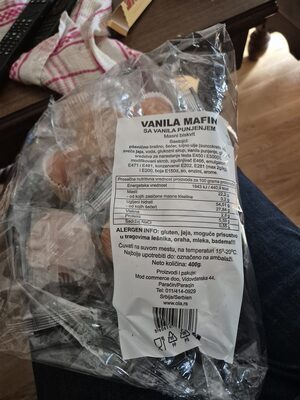
Vanilla muffin
26
Nutrition Score
Poor

Vanilla muffin

8606106607826
Starts at 50. Rises with whole foods, proteins, vitamins; drops with added sugars, trans fats, and syrups.
61
Hazard Score
Use with caution
19
Mirella Index
Basic
Quality category: Gourmet (80+), Everyday (50–79), or Basic (0–49)
Ingredients
wheat
wheat  ·  No known concerns
Contains cereals containing gluten
Cereal grain milled into flour for bread, pasta, and baked goods. Contains gluten.
Sugar (Sucrose)
Sugar  ·  −4 pts
Moderate health concern Source: WHO, FDA
Common refined sugar. High consumption is linked to obesity, type 2 diabetes, and tooth decay.
sunflower oil
sunflower oil  ·  No known concerns
Vegetable oil pressed from sunflower seeds, commonly used for cooking and frying due to its light flavor.
Egg
Egg  ·  No known concerns
Contains eggs
Whole chicken egg, used as a binding, leavening, and enriching ingredient in countless recipes. Contains egg allergen.
Water
Water  ·  No known concerns
The most common ingredient in processed foods.
Glucose Syrup
GlucSyrup  ·  −5 pts
Moderate health concern Source: EFSA, FDA
Refined sweetener from hydrolysed starch. High glycaemic index; linked to blood sugar spikes.
Cream Filling
CreamFilling  ·  −5 pts
A sweet, fat-and-sugar dessert filling (cakes, wafers, pastries).
Glycerol (Glycerin)
E422  ·  No known concerns
Humectant used to maintain moisture in cakes, protein bars, and chocolates. Generally safe but can cause mild digestive issues in massive doses.
Diphosphates (Sodium/Potassium)
E450  ·  −5 pts
Moderate health concern Source: EFSA
Water-binding stabilizers heavily used in industrial minced meat and sausages to artificially add weight. High intake may impair calcium absorption.
Sodium Carbonates (Baking Soda)
E500  ·  No known concerns
Common raising agent and acidity regulator. Safe at normal food use levels.
Modified Starch
ModStarch  ·  −2 pts
Moderate health concern Source: EFSA, FDA
Chemically or physically treated starch for improved cooking properties. Generally safe.
Carboxymethyl Cellulose
E466  ·  −2 pts
Moderate health concern Source: EFSA
Thickener and texturizer. Linked in recent studies to alterations in intestinal barriers.
Mono- and Diglycerides of Fatty Acids
E471  ·  −3 pts
Moderate health concern Source: EFSA, FDA
Common emulsifiers derived from fats. May contain trans fats. Used in bread, margarine, and ice cream.
Sodium Stearoyl Lactylate (SSL)
E481  ·  No known concerns
Emulsifier used in baked goods to improve texture and shelf life. Generally safe.
Potassium Sorbate
E202  ·  −2 pts
Moderate health concern Source: EFSA, FDA
Widely used mild preservative to prevent mold. Generally recognized as safe within standard legal limits.
Sodium Propionate
E281  ·  −2 pts
Moderate health concern Source: EFSA
Mould inhibitor in bakery products. Some studies suggest possible behavioural effects in children.
Sorbic Acid
E200  ·  −2 pts
Moderate health concern Source: EFSA, FDA
Naturally occurring preservative used in cheeses, wines and baked goods. Generally considered safe.
Sulphite Ammonia Caramel
E150d  ·  −5 pts
Moderate health concern Source: EFSA
Contains sulphites
Caramel colorant made using ammonia and sulphite compounds, used in colas and dark sauces. Contains sulphites allergen.
Salt (Sodium Chloride)
Salt  ·  −2 pts
Moderate health concern Source: WHO, FDA
Common table salt used for flavouring and preservation. High intake is linked to hypertension.
Enzyme (Unspecified)
EnzymeUnspecified  ·  No known concerns
Processing aid enzyme listed on the label without further specification (common for e.g. amylase in baked goods).
Natural Flavouring
NatFlavour  ·  No known concerns
Catch-all term for flavour compounds derived from natural sources (plants, animals, fermentation).
Advertisement
Community Reviews

Please log in to leave a review. Login

Something wrong with this product's data? v