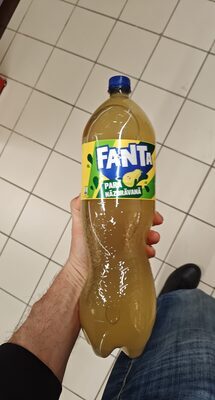
Para nazdravana
40
Nutrition Score
Poor

Para nazdravana

5942321004037
Starts at 50. Rises with whole foods, proteins, vitamins; drops with added sugars, trans fats, and syrups.
65
Hazard Score
Use with caution
35
Mirella Index
Basic
Quality category: Gourmet (80+), Everyday (50–79), or Basic (0–49)
Ingredients
Water
Water  ·  No known concerns
The most common ingredient in processed foods.
Sugar (Sucrose)
Sugar  ·  −4 pts
Moderate health concern Source: WHO, FDA
Common refined sugar. High consumption is linked to obesity, type 2 diabetes, and tooth decay.
Pear Juice Concentrate
PearJuiceConcentrate  ·  No known concerns
Concentrated pear juice used as a food ingredient.
Carbon Dioxide
E290  ·  No known concerns
Gas used for carbonation in fizzy drinks and as a packaging gas to extend shelf life.
Citric Acid
E330  ·  No known concerns
Natural organic acid used as an antioxidant and flavoring. Safe for ingestion.
Malic Acid
E296  ·  No known concerns
Natural acid found in apples and pears. Used as acidity regulator and flavour enhancer.
Acacia Gum (Gum Arabic)
E414  ·  No known concerns
Natural hardened sap harvested from Acacia trees. Used as an emulsifier and stabilizer in high-end sweets and sodas. High in soluble prebiotic fiber.
Glycerol Esters of Wood Rosin (E445)
Glycerol Esters of Wood Rosin  ·  −2 pts
Moderate health concern Source: EFSA, FDA
Synthetic weighting/emulsifying agent used to disperse citrus oils in soft drinks.
Sodium Gluconate (E576)
Sodium Gluconate  ·  No known concerns
Salt of gluconic acid used as a sequestrant to bind trace metals and stabilize food color and flavor.
Ascorbic Acid (Vitamin C)
E300  ·  No known concerns
Natural antioxidant vitamin. Used to prevent oxidation in foods and beverages. Safe and beneficial.
Alpha-Tocopherol (Synthetic Vitamin E)
E307  ·  No known concerns
Synthetic form of vitamin E used as an antioxidant in food. Generally safe.
Potassium Sorbate
E202  ·  −2 pts
Moderate health concern Source: EFSA, FDA
Widely used mild preservative to prevent mold. Generally recognized as safe within standard legal limits.
Cyclamic Acid
E952  ·  −15 pts
High health concern Source: FDA
Artificial sweetener. Banned in the US since 1969 due to high-dose animal bladder tumor links.
Acesulfame K
E950  ·  −5 pts
Moderate health concern Source: FDA
Artificial calorie-free sweetener. Contains methylene chloride; long-term safety remains debated.
Sucralose
E955  ·  −2 pts
Moderate health concern Source: FDA
Artificial sweetener (Splenda). Potential negative impacts on gut microbiome and insulin sensitivity.
Natural Flavouring
NatFlavour  ·  No known concerns
Catch-all term for flavour compounds derived from natural sources (plants, animals, fermentation).
Sulphite Ammonia Caramel
E150d  ·  −5 pts
Moderate health concern Source: EFSA
Contains sulphites
Caramel colorant made using ammonia and sulphite compounds, used in colas and dark sauces. Contains sulphites allergen.
Lutein
E161b  ·  No known concerns
Natural yellow-orange pigment from marigold flowers, used to color foods and supplements; also an eye-health nutrient.
Advertisement
Community Reviews

Please log in to leave a review. Login

Something wrong with this product's data? v