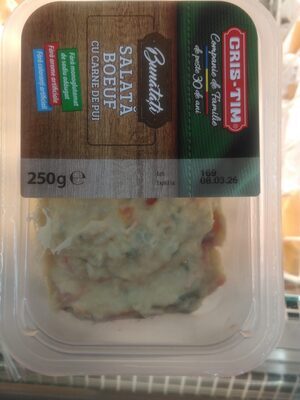
SALATA BOEUF CU CARNE DE
63
Nutrition Score
Moderate

SALATA BOEUF CU CARNE DE

5941265008910
Starts at 50. Rises with whole foods, proteins, vitamins; drops with added sugars, trans fats, and syrups.
79
Hazard Score
Use with caution
63
Mirella Index
Everyday
Quality category: Gourmet (80+), Everyday (50–79), or Basic (0–49)
Ingredients
Potato
Potato  ·  No known concerns
Starchy root vegetable eaten boiled, baked, fried, or mashed, a staple food in many cuisines.
Cucumber
Cucumber  ·  No known concerns
Crisp, watery vegetable eaten raw in salads or pickled.
Water
Water  ·  No known concerns
The most common ingredient in processed foods.
Salt (Sodium Chloride)
Salt  ·  −2 pts
Moderate health concern Source: WHO, FDA
Common table salt used for flavouring and preservation. High intake is linked to hypertension.
Sugar (Sucrose)
Sugar  ·  −4 pts
Moderate health concern Source: WHO, FDA
Common refined sugar. High consumption is linked to obesity, type 2 diabetes, and tooth decay.
Wine Vinegar
WineVin  ·  No known concerns
Natural vinegar produced from fermented red wine. Contains trace grape polyphenols.
Dill
Dill  ·  No known concerns
Feathery herb with a mild, tangy flavor, used fresh or dried in pickles, fish dishes, and sauces.
Mustard
Mustard  ·  No known concerns
Contains mustard
Pungent condiment made from ground mustard seeds mixed with liquid, used as a spread and flavoring. Contains mustard allergen.
Acetic Acid (Glacial)
E260  ·  −2 pts
Moderate health concern Source: FDA
Concentrated acid used to fake traditional fermentation in cheap vinegars (synthetic vinegar). Safe but nutritionally empty.
sunflower oil
sunflower oil  ·  No known concerns
Vegetable oil pressed from sunflower seeds, commonly used for cooking and frying due to its light flavor.
Modified Starch
ModStarch  ·  −2 pts
Moderate health concern Source: EFSA, FDA
Chemically or physically treated starch for improved cooking properties. Generally safe.
Guar Gum
E412  ·  No known concerns
Natural thickener from guar beans. Used in dairy products, sauces, and gluten-free products.
Maltodextrin
MaltodextrinIng  ·  −4 pts
Moderate health concern Source: FDA, EFSA
Highly processed starch derivative. Very high glycaemic index, used as filler and thickener.
Beta-Carotene
E160a  ·  No known concerns
Natural orange-yellow pigment found in carrots. Acts as a precursor to vitamin A; generally safe.
Chicken Meat
ChickenMeat  ·  No known concerns
Poultry meat from chicken, a lean source of protein used fresh, frozen, or processed.
Carrot
Carrot  ·  No known concerns
Crunchy orange root vegetable eaten raw or cooked, a good source of beta-carotene.
Peas
Peas  ·  No known concerns
Small round legume seeds, eaten fresh, frozen, or dried. A good source of plant protein and fiber.
Bell Pepper
BellPepper  ·  No known concerns
Sweet pepper variety eaten raw or cooked, available in green, red, yellow, and orange. High in vitamin C.
Vinegar
Vinegar  ·  No known concerns
Sour liquid made by fermenting alcohol into acetic acid, used as a preservative and flavoring in dressings and pickles.
Black Pepper
BlackPepper  ·  No known concerns
Pungent dried berry ground as the world's most common spice, used to season nearly any savory dish.
Citric Acid
E330  ·  No known concerns
Natural organic acid used as an antioxidant and flavoring. Safe for ingestion.
Potassium Sorbate
E202  ·  −2 pts
Moderate health concern Source: EFSA, FDA
Widely used mild preservative to prevent mold. Generally recognized as safe within standard legal limits.
Sodium Benzoate
E211  ·  −5 pts
Moderate health concern Source: FDA, EFSA
Common preservative. Can react with Vitamin C to form benzene (a known carcinogen).
Sodium Acetates
E262  ·  No known concerns
Sodium salt of acetic acid. Used as seasoning (salt and vinegar flavor) and preservative.
Advertisement
Community Reviews

Please log in to leave a review. Login

Something wrong with this product's data? v