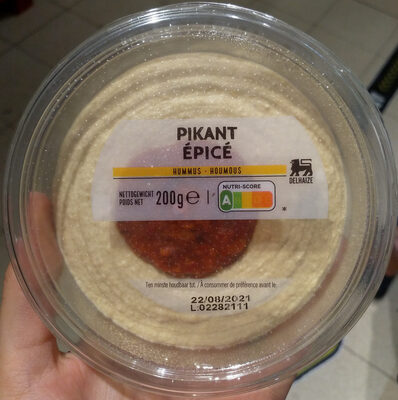
Humus picant
70
Nutrition Score
Moderate

Humus picant

5400112371428
Starts at 50. Rises with whole foods, proteins, vitamins; drops with added sugars, trans fats, and syrups.
84
Hazard Score
Healthy
65
Mirella Index
Everyday
Quality category: Gourmet (80+), Everyday (50–79), or Basic (0–49)
Ingredients
Chickpeas
Chickpeas  ·  No known concerns
Round legume used to make hummus and falafel, or added whole to salads and stews.
Water
Water  ·  No known concerns
The most common ingredient in processed foods.
Canola Oil (Rapeseed)
CanolaOil  ·  −2 pts
Moderate health concern Source: FDA, EFSA
Vegetable oil derived from a variety of rapeseed. Low in saturated fat, high in monounsaturated fats.
Sesame Seeds
SesameSeed  ·  No known concerns
Contains sesame
Small oilseeds with a nutty flavor, used whole, ground into tahini, or pressed for oil. Contains sesame allergen.
Modified Starch
ModStarch  ·  −2 pts
Moderate health concern Source: EFSA, FDA
Chemically or physically treated starch for improved cooking properties. Generally safe.
Salt (Sodium Chloride)
Salt  ·  −2 pts
Moderate health concern Source: WHO, FDA
Common table salt used for flavouring and preservation. High intake is linked to hypertension.
Citric Acid
E330  ·  No known concerns
Natural organic acid used as an antioxidant and flavoring. Safe for ingestion.
Garlic
Garlic  ·  No known concerns
Pungent bulb from the allium family, used fresh, dried, or powdered as a flavoring in savory cooking.
Potassium Sorbate
E202  ·  −2 pts
Moderate health concern Source: EFSA, FDA
Widely used mild preservative to prevent mold. Generally recognized as safe within standard legal limits.
Lactic Acid
E270  ·  No known concerns
Natural acid produced by fermentation. Safe preservative and acidity regulator in many foods.
Acetic Acid (Glacial)
E260  ·  −2 pts
Moderate health concern Source: FDA
Concentrated acid used to fake traditional fermentation in cheap vinegars (synthetic vinegar). Safe but nutritionally empty.
Cumin
Cumin  ·  No known concerns
Warm, earthy spice from dried seeds, a key ingredient in curries, chili, and Middle Eastern cooking.
Xanthan Gum
E415  ·  No known concerns
Thickener and stabilizer produced by bacterial fermentation. Safe in normal food amounts.
Chili / Cayenne
Chili  ·  No known concerns
Hot pepper used fresh, dried, or ground to add heat to dishes.
Tomato
Tomato  ·  No known concerns
Juicy red fruit used as a vegetable in countless savory dishes, sauces, and salads.
Onion
Onion  ·  No known concerns
Pungent bulb vegetable used raw or cooked as a base flavoring in savory dishes worldwide.
Carrot
Carrot  ·  No known concerns
Crunchy orange root vegetable eaten raw or cooked, a good source of beta-carotene.
Sugar (Sucrose)
Sugar  ·  −4 pts
Moderate health concern Source: WHO, FDA
Common refined sugar. High consumption is linked to obesity, type 2 diabetes, and tooth decay.
Paprika Extract
E160c  ·  No known concerns
Natural red-orange colorant extracted from paprika peppers, used to tint sauces, snacks, and processed meats.
Yeast Extract
YeastExt  ·  −2 pts
Moderate health concern Source: EFSA, FDA
Flavour enhancer with natural umami taste from autolysed yeast. Contains naturally occurring glutamates.
Bell Pepper
BellPepper  ·  No known concerns
Sweet pepper variety eaten raw or cooked, available in green, red, yellow, and orange. High in vitamin C.
Vinegar
Vinegar  ·  No known concerns
Sour liquid made by fermenting alcohol into acetic acid, used as a preservative and flavoring in dressings and pickles.
Vegetable Fibre
VegFibre  ·  No known concerns
General term for plant-derived fiber added to processed foods to boost fiber content and improve texture.
Parsley
Parsley  ·  No known concerns
Fresh herb used as a garnish and flavoring in a wide range of savory dishes.
Advertisement
Community Reviews

Please log in to leave a review. Login

Something wrong with this product's data? v