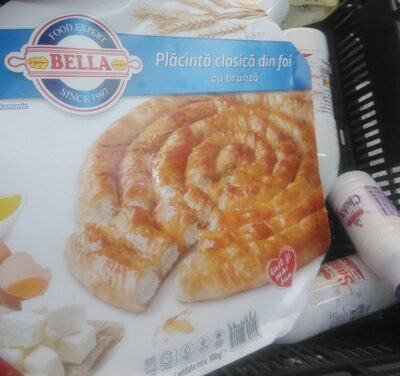
Plăcintă clasică din foi cu brânză
51
Nutrition Score
Moderate

Plăcintă clasică din foi cu brânză

3800047700119
Starts at 50. Rises with whole foods, proteins, vitamins; drops with added sugars, trans fats, and syrups.
81
Hazard Score
Healthy
48
Mirella Index
Basic
Quality category: Gourmet (80+), Everyday (50–79), or Basic (0–49)
Ingredients
wheat
wheat  ·  No known concerns
Contains cereals containing gluten
Cereal grain milled into flour for bread, pasta, and baked goods. Contains gluten.
Water
Water  ·  No known concerns
The most common ingredient in processed foods.
sunflower oil
sunflower oil  ·  No known concerns
Vegetable oil pressed from sunflower seeds, commonly used for cooking and frying due to its light flavor.
Palm Oil
Palm-Oil  ·  −5 pts
Moderate health concern Source: WHO, EFSA
Widely used vegetable fat. High in saturated fats; linked to cardiovascular risk. Environmental concerns.
Canola Oil (Rapeseed)
CanolaOil  ·  −2 pts
Moderate health concern Source: FDA, EFSA
Vegetable oil derived from a variety of rapeseed. Low in saturated fat, high in monounsaturated fats.
Cottonseed Oil
CottonseedOil  ·  −1 pts
Vegetable oil pressed from cotton plant seeds, used for frying and in processed foods. Higher in saturated fat than most seed oils.
corn starch
corn starch  ·  No known concerns
Powdered starch extracted from corn kernels, used as a thickener in sauces, soups, and baked goods.
Salt (Sodium Chloride)
Salt  ·  −2 pts
Moderate health concern Source: WHO, FDA
Common table salt used for flavouring and preservation. High intake is linked to hypertension.
Glycerol (Glycerin)
E422  ·  No known concerns
Humectant used to maintain moisture in cakes, protein bars, and chocolates. Generally safe but can cause mild digestive issues in massive doses.
Sugar (Sucrose)
Sugar  ·  −4 pts
Moderate health concern Source: WHO, FDA
Common refined sugar. High consumption is linked to obesity, type 2 diabetes, and tooth decay.
Gluten
GlutenIng  ·  −3 pts
Moderate health concern Source: EFSA, FDA
Contains cereals containing gluten
Protein complex in wheat, rye and barley. Causes coeliac disease in ~1% of population.
Ascorbic Acid (Vitamin C)
E300  ·  No known concerns
Natural antioxidant vitamin. Used to prevent oxidation in foods and beverages. Safe and beneficial.
Enzyme (Unspecified)
EnzymeUnspecified  ·  No known concerns
Processing aid enzyme listed on the label without further specification (common for e.g. amylase in baked goods).
Wheat Starch
WheatStarch  ·  No known concerns
Contains cereals containing gluten
Starch extracted from wheat, used as a thickener; may retain trace gluten.
Natural Flavouring
NatFlavour  ·  No known concerns
Catch-all term for flavour compounds derived from natural sources (plants, animals, fermentation).
L-Cysteine
E920  ·  No known concerns
Amino acid used as a dough conditioner to improve elasticity in commercial bread. Often derived from feathers, hair, or synthesized microbially.
Curd
Curd  ·  No known concerns
Contains milk
Coagulated milk product formed by curdling with acid or rennet, used fresh or as a base for cheese. Contains milk allergen.
Cheese
Cheese  ·  No known concerns
Contains milk
Dairy product; contains milk (allergen).
Milk
Milk  ·  No known concerns
Contains milk
Dairy liquid from cows or other mammals, a source of protein and calcium. Contains milk allergen.
Yeast
Yeast  ·  No known concerns
Single-celled fungus used to ferment dough for bread and beer, or as a nutritional supplement (nutritional yeast).
Calcium Chloride
E509  ·  No known concerns
Inorganic compound used as a firming agent in canned vegetables and tofu coagulation.
Rennet
Rennet  ·  No known concerns
Enzyme complex that coagulates milk into curds for cheesemaking; sourced from animal stomach lining, microbial fermentation, or plants.
Semolina
Semolina  ·  No known concerns
Contains cereals containing gluten
Coarse flour milled from durum wheat, used for pasta, couscous, and some breads. Contains gluten.
Cellulose
E460  ·  No known concerns
Plant fibre used as an anti-caking agent, thickener, and bulking agent. Non-digestible but safe.
Carboxymethyl Cellulose
E466  ·  −2 pts
Moderate health concern Source: EFSA
Thickener and texturizer. Linked in recent studies to alterations in intestinal barriers.
Milk Protein
MilkProtein  ·  No known concerns
Contains milk
Concentrated protein extracted from milk (casein and/or whey), added to boost protein content in processed foods. Contains milk allergen.
Advertisement
Community Reviews

Please log in to leave a review. Login

Something wrong with this product's data? v