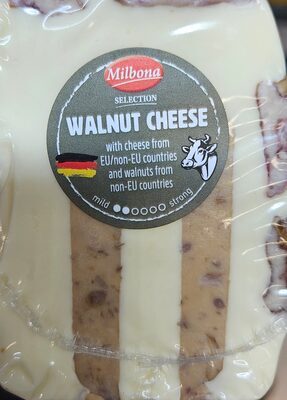
Топено сирене с орехи
61
Nutrition Score
Moderate

Топено сирене с орехи

2880760001589
Starts at 50. Rises with whole foods, proteins, vitamins; drops with added sugars, trans fats, and syrups.
75
Hazard Score
Use with caution
55
Mirella Index
Everyday
Quality category: Gourmet (80+), Everyday (50–79), or Basic (0–49)
Ingredients
Milk
Milk  ·  No known concerns
Contains milk
Dairy liquid from cows or other mammals, a source of protein and calcium. Contains milk allergen.
Salt (Sodium Chloride)
Salt  ·  −2 pts
Moderate health concern Source: WHO, FDA
Common table salt used for flavouring and preservation. High intake is linked to hypertension.
Rennet
Rennet  ·  No known concerns
Enzyme complex that coagulates milk into curds for cheesemaking; sourced from animal stomach lining, microbial fermentation, or plants.
Microbial Rennet
MicrobialRennet  ·  No known concerns
Coagulating enzyme produced by fermentation rather than from animal stomachs, a vegetarian alternative to traditional rennet.
Live Probiotic Cultures
ProbioticCultures  ·  No known concerns
Live beneficial bacterial cultures added to foods.
Beta-Carotene
E160a  ·  No known concerns
Natural orange-yellow pigment found in carrots. Acts as a precursor to vitamin A; generally safe.
Butter (Dairy Fat)
ButterFat  ·  −2 pts
Moderate health concern Source: FDA
Contains milk
Natural dairy fat. High in saturated fat but also contains beneficial fat-soluble vitamins.
Water
Water  ·  No known concerns
The most common ingredient in processed foods.
Walnut
Walnut  ·  No known concerns
Contains tree nuts
Wrinkled tree nut with a rich, slightly bitter flavor, eaten whole or used in baking. Contains tree nut allergen.
Whey Powder (Dried Whey)
WheyPowder  ·  No known concerns
Contains milk
Dried form of whey, the liquid left after cheesemaking, used to add protein and texture to processed foods. Contains milk allergen.
Milk Protein
MilkProtein  ·  No known concerns
Contains milk
Concentrated protein extracted from milk (casein and/or whey), added to boost protein content in processed foods. Contains milk allergen.
Natural Flavouring
NatFlavour  ·  No known concerns
Catch-all term for flavour compounds derived from natural sources (plants, animals, fermentation).
Sodium Phosphate
E339  ·  −2 pts
Phosphate additive; high intake of phosphates is monitored.
Calcium Phosphate
E341  ·  −2 pts
Mineral salt used as a firming agent, anti-caking agent, and calcium fortificant in foods.
Diphosphates (Sodium/Potassium)
E450  ·  −5 pts
Moderate health concern Source: EFSA
Water-binding stabilizers heavily used in industrial minced meat and sausages to artificially add weight. High intake may impair calcium absorption.
Polyphosphates
E452  ·  −5 pts
Moderate health concern Source: EFSA
Water-binding phosphate salts used to improve texture and shelf life in processed meat, cheese, and seafood. High phosphate intake is linked to cardiovascular and kidney concerns.
Sorbic Acid
E200  ·  −2 pts
Moderate health concern Source: EFSA, FDA
Naturally occurring preservative used in cheeses, wines and baked goods. Generally considered safe.
Lactic Acid
E270  ·  No known concerns
Natural acid produced by fermentation. Safe preservative and acidity regulator in many foods.
Plain Caramel
E150a  ·  No known concerns
Natural brown colorant made by heating sugar, used to darken drinks, sauces, and baked goods.
Paprika Extract
E160c  ·  No known concerns
Natural red-orange colorant extracted from paprika peppers, used to tint sauces, snacks, and processed meats.
Carrageenan
E407  ·  −5 pts
Moderate health concern Source: EFSA
Thickener extracted from red seaweed. Some controversial evidence links degraded types to gut inflammation.
Guar Gum
E412  ·  No known concerns
Natural thickener from guar beans. Used in dairy products, sauces, and gluten-free products.
Advertisement
Community Reviews

Please log in to leave a review. Login

Something wrong with this product's data? v