41
Nutrition Score
Poor

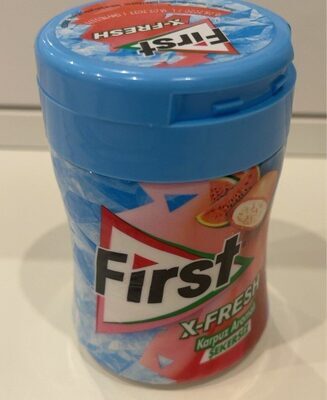
First x fresh

7622201451486
Starts at 50. Rises with whole foods, proteins, vitamins; drops with added sugars, trans fats, and syrups.
76
Hazard Score
Use with caution
35
Mirella Index
Basic
Quality category: Gourmet (80+), Everyday (50–79), or Basic (0–49)
Ingredients
Xylitol
XylitolSweet  ·  −1 pts
Moderate health concern Source: EFSA, FDA
Sugar alcohol sweetener derived from birch wood or corn. Helps prevent tooth decay. Toxic to dogs.
Sorbitol
E420  ·  −2 pts
Moderate health concern Source: EFSA, FDA
Sugar alcohol used as a sweetener and humectant. Can have a laxative effect in large amounts.
Maltitol
E965  ·  −2 pts
Moderate health concern Source: EFSA
Sugar alcohol sweetener. Safe for teeth but causes digestive gas, bloating, and laxative effects in moderate doses.
Aspartame
E951  ·  −5 pts
Moderate health concern Source: IARC, FDA
Artificial sweetener. Reclassified by IARC as Group 2B (possibly carcinogenic to humans).
Acesulfame K
E950  ·  −5 pts
Moderate health concern Source: FDA
Artificial calorie-free sweetener. Contains methylene chloride; long-term safety remains debated.
Gum Base
GumBase  ·  −1 pts
Insoluble elastomer/resin base of chewing gum.
Acacia Gum (Gum Arabic)
E414  ·  No known concerns
Natural hardened sap harvested from Acacia trees. Used as an emulsifier and stabilizer in high-end sweets and sodas. High in soluble prebiotic fiber.
Citric Acid
E330  ·  No known concerns
Natural organic acid used as an antioxidant and flavoring. Safe for ingestion.
Lecithin
E322  ·  No known concerns
Natural emulsifier often derived from soy or eggs. Completely safe.
Mono- and Diglycerides of Fatty Acids
E471  ·  −3 pts
Moderate health concern Source: EFSA, FDA
Common emulsifiers derived from fats. May contain trans fats. Used in bread, margarine, and ice cream.
Triacetin (Glycerol Triacetate)
E1518  ·  No known concerns
Food additive E1518 used as a humectant, carrier, and glazing agent.
Carmine (Cochineal extract)
E120  ·  −5 pts
Moderate health concern Source: EFSA
Natural red food coloring derived from crushed insects. Used in strawberry yogurts, sweets, and meats. Known allergen; can trigger asthma or anaphylaxis.
Anthocyanins
E163  ·  No known concerns
Natural blue-red pigments found in berries, red cabbage, and grapes. Rich in antioxidants.
Beta-Carotene
E160a  ·  No known concerns
Natural orange-yellow pigment found in carrots. Acts as a precursor to vitamin A; generally safe.
Community Reviews

Please log in to leave a review. Login

Something wrong with this product's data? v