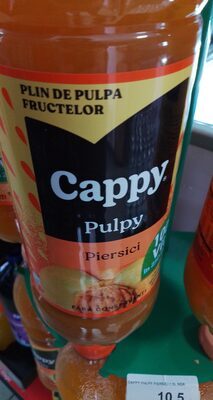
Cappy pulpy piersici
42
Nutrition Score
Poor

Cappy pulpy piersici

5942321000558
Starts at 50. Rises with whole foods, proteins, vitamins; drops with added sugars, trans fats, and syrups.
75
Hazard Score
Use with caution
47
Mirella Index
Basic
Quality category: Gourmet (80+), Everyday (50–79), or Basic (0–49)
Ingredients
Water
Water  ·  No known concerns
The most common ingredient in processed foods.
Peach Puree Concentrate
PeachPureeConcentrate  ·  No known concerns
Concentrated peach puree used as a food ingredient.
Peach
Peach  ·  No known concerns
Stone fruit with sweet, juicy flesh, eaten fresh or canned. A source of vitamin C and fiber.
High Fructose Corn Syrup
HFCS  ·  −5 pts
Moderate health concern Source: FDA, WHO
Refined sweetener. FDA states it is not more dangerous than other sugars; broad scientific consensus finds no meaningful metabolic difference from sucrose. Still a high-glycaemic added sugar linked to obesity/metabolic risk in excess.
Guar Gum
E412  ·  No known concerns
Natural thickener from guar beans. Used in dairy products, sauces, and gluten-free products.
Natural Flavouring
NatFlavour  ·  No known concerns
Catch-all term for flavour compounds derived from natural sources (plants, animals, fermentation).
Malic Acid
E296  ·  No known concerns
Natural acid found in apples and pears. Used as acidity regulator and flavour enhancer.
Citric Acid
E330  ·  No known concerns
Natural organic acid used as an antioxidant and flavoring. Safe for ingestion.
Ascorbic Acid (Vitamin C)
E300  ·  No known concerns
Natural antioxidant vitamin. Used to prevent oxidation in foods and beverages. Safe and beneficial.
Cyclamic Acid
E952  ·  −15 pts
High health concern Source: FDA
Artificial sweetener. Banned in the US since 1969 due to high-dose animal bladder tumor links.
Steviol Glycosides
E960  ·  No known concerns
Natural zero-calorie sweetener derived from the Stevia plant. Safe alternative to sugar.
Acesulfame K
E950  ·  −5 pts
Moderate health concern Source: FDA
Artificial calorie-free sweetener. Contains methylene chloride; long-term safety remains debated.
Beta-Carotene
E160a  ·  No known concerns
Natural orange-yellow pigment found in carrots. Acts as a precursor to vitamin A; generally safe.
Advertisement
Community Reviews

Please log in to leave a review. Login

Something wrong with this product's data? v